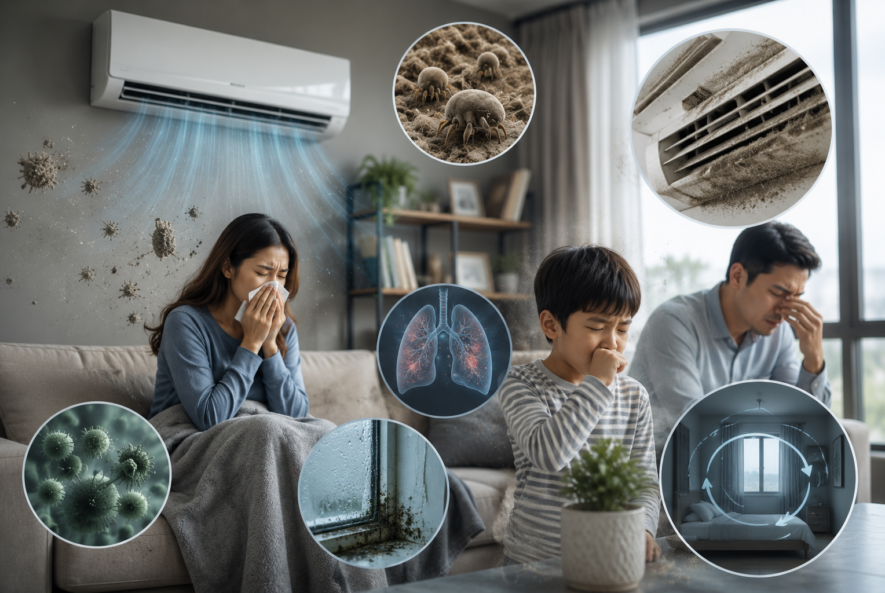
AC rooms feel comfortable, especially during hot weather. But spending long hours in closed indoor spaces with poor ventilation and dust buildup can quietly affect your health over time. Many homes, offices, shopping centres, and workplaces rely heavily on AC systems while keeping windows closed throughout the day. This often creates an environment where stale air, dust particles, allergens, and indoor pollutants continue circulating inside the same space. The result may include headaches, allergies, throat irritation, breathing discomfort, fatigue, sinus problems, and worsening asthma symptoms, even when the room appears clean. As people spend more time indoors than ever before, indoor air quality has become an important part of maintaining respiratory health and overall well-being.
Why Indoor Air Quality Matters More Than Ever
Indoor air may sometimes contain higher concentrations of pollutants than outdoor air, especially in sealed environments with limited airflow. Common indoor pollutants include:
- Dust particles
- Dust mites
- Mould spores
- Pet dander
- Pollen
- Smoke residue
- Chemical fumes from cleaning products
- Poorly filtered recycled air
- Bacteria and airborne particles
When ventilation is poor, these pollutants remain trapped indoors and continue circulating through the room. Over time, this may contribute to allergies, respiratory irritation, sinus discomfort, headaches, and poor concentration.
What Happens in Poorly Ventilated AC Rooms?
Air conditioners are designed to cool indoor spaces, but cooling alone does not guarantee healthy air circulation. In many closed environments, the same indoor air gets recycled repeatedly with very little fresh air entering the room. This can lead to:
- Stale indoor air
- Increased dust circulation
- Higher indoor pollutant concentration
- Reduced airflow
- Dry indoor conditions
- Poor oxygen circulation in crowded spaces
People often notice symptoms after spending long hours inside offices, bedrooms, conference rooms, or other poorly ventilated spaces.
Can AC Rooms Cause Breathing Problems?
Yes, for some people, prolonged exposure to dusty or poorly ventilated AC environments may contribute to respiratory discomfort. Dry air, airborne dust, allergens, and poor airflow can irritate the respiratory tract and worsen existing sensitivities. Common breathing-related symptoms include:
- Dry cough
- Chest discomfort
- Throat irritation
- Wheezing
- Shortness of breath
- Nasal blockage
- Sinus pressure
People with asthma, allergies, or chronic respiratory conditions are often more sensitive to indoor air quality problems.
How Dust Builds Up Indoors
Dust enters indoor spaces through multiple sources, including:
- Shoes and clothing
- Carpets and curtains
- Upholstery and furniture
- Open windows and doors
- AC vents and filters
- Outdoor pollution particles
In air-conditioned rooms, dust often accumulates inside filters, ducts, ceilings, and corners where airflow remains limited. If AC systems are not cleaned regularly, these particles may continue circulating throughout the room. Indoor dust can contain:
- Dust mites
- Mold fragments
- Pollen
- Pet hair
- Microscopic pollutants
For sensitive individuals, repeated exposure may trigger inflammation and allergy symptoms.
Signs Your Indoor Air Quality May Be Affecting Your Health
Many people do not immediately realise their indoor environment may be contributing to their symptoms. Possible warning signs include:
- Frequent sneezing indoors
- Persistent coughing in AC rooms
- Itchy or watery eyes
- Dry throat
- Headaches in closed spaces
- Feeling tired indoors
- Difficulty concentrating
- Sinus irritation
- Breathing discomfort
- Allergies worsening at home or office
If symptoms improve after leaving a particular room or building, indoor air quality may be a contributing factor.
Why Dirty AC Filters Can Affect Health
AC filters trap dust, allergens, and airborne particles. But when filters become dirty, they may stop functioning effectively. Dirty filters can:
- Circulate dust repeatedly
- Reduce airflow efficiency
- Increase indoor allergens
- Produce unpleasant odours
- Worsen respiratory irritation
- Increase electricity consumption
Regular AC maintenance helps improve airflow and supports cleaner indoor air. Periodic cleaning or replacement of filters, depending on usage and environmental conditions, is recommended.
Can Poor Ventilation Increase Infection Risk?
Closed indoor environments with weak airflow may increase the spread of airborne infections, especially in crowded settings. When ventilation is poor:
- Respiratory droplets remain suspended longer
- Air circulation becomes limited
- Germs may spread more easily indoors
This became an important public health concern during seasonal viral outbreaks and respiratory infections. Improving airflow and ventilation may help support healthier indoor environments.
Who Is More Vulnerable to Poor Indoor Air Quality?
Some individuals are more sensitive to dust exposure and poor ventilation. Higher-risk groups include:
- Children
- Elderly adults
- People with asthma
- Allergy sufferers
- Individuals with weak immunity
- People with chronic lung conditions
Children are especially vulnerable because their lungs are still developing and they breathe more rapidly than adults.
How to Improve Indoor Air Quality Naturally
Improving indoor air quality does not always require expensive changes. Simple daily habits can make indoor spaces healthier and more comfortable.
Open Windows Regularly
Allow fresh air to circulate whenever possible. Even short periods of natural airflow can help reduce stale indoor air. Cross-ventilation improves air movement inside rooms.
Clean AC Filters Frequently
Dust-filled filters reduce cooling efficiency and indoor air quality. Helpful maintenance habits include:
- Cleaning filters regularly
- Scheduling professional AC servicing
- Keeping vents and ducts dry and clean
Reduce Dust Accumulation
Reducing indoor dust helps minimise allergen exposure. Helpful cleaning practices include:
- Vacuuming carpets and upholstery
- Washing curtains and bedding frequently
- Using damp cloths instead of dry dusting
- Removing unnecessary clutter
Maintain Healthy Indoor Humidity
Very dry indoor air may worsen throat irritation and skin dryness. Helpful steps include:
- Avoid excessive cooling
- Maintain moderate humidity levels
- Use humidifiers if the indoor air becomes too dry
Balanced humidity supports comfort and respiratory health.
Improve Airflow Indoors
Better airflow supports fresher indoor environments. Helpful steps include:
- Using exhaust fans in kitchens and bathrooms
- Avoiding indoor smoking
- Preventing mold buildup
- Keeping rooms uncluttered
Some people also use air purifiers to reduce indoor airborne particles.
When Should You See a Doctor?
Indoor air-related symptoms should not be ignored if they persist or become severe. Seek medical advice if you experience:
- Ongoing cough
- Frequent sinus infections
- Persistent allergies
- Chest tightness
- Wheezing
- Breathing difficulty
- Worsening asthma symptoms
A healthcare professional can help identify whether indoor triggers may be contributing to your symptoms.
Conclusion
Air conditioners provide comfort, but ventilation and cleanliness are equally important for maintaining a healthy indoor environment. Closed rooms with poor airflow, dust buildup, and dirty AC filters can quietly affect respiratory health, energy levels, concentration, and overall well-being.
Simple habits such as improving ventilation, cleaning filters regularly, reducing dust, and maintaining balanced humidity can make a noticeable difference in indoor comfort and air quality. A cooler room should also be a healthier room.
Frequently Asked Questions
1. Can sleeping in an AC all night affect breathing?
For some people, prolonged exposure to cold or dry air from AC systems may worsen throat irritation, nasal dryness, or breathing discomfort, especially in individuals with allergies or asthma.
2. Why do allergies worsen indoors for some people?
Indoor allergens such as dust mites, mould, pet dander, and poor ventilation may trigger allergy symptoms in sensitive individuals.
3. Can poor ventilation cause headaches and fatigue?
Yes, stale indoor air, weak airflow, and increased indoor pollutants may contribute to tiredness, headaches, and reduced concentration.
4. How often should AC filters be cleaned?
Cleaning schedules depend on usage and environment, but regular maintenance every few months is commonly recommended to support cleaner indoor air.
5. Can indoor air quality affect children’s health?
Yes, children are more sensitive to indoor pollutants, which may contribute to allergies, cough, asthma symptoms, and respiratory irritation.
6. Is poor ventilation harmful during seasonal infections?
Poor airflow in crowded indoor spaces may increase the spread of respiratory infections because airborne particles remain trapped indoors for longer periods.
Dr. Shivanshu Raj Goyal, regarded among the best asthma and respiratory specialists in Delhi, India, emphasizes the importance of proper indoor ventilation, regular AC servicing, dust control, and maintaining clean indoor air to protect long-term lung health. Simple preventive measures can greatly reduce the risk of allergies, asthma flare-ups, and indoor air-related illnesses.