Breathing difficulty, wheezing, and a tight feeling in the chest are symptoms that bring thousands of patients across Gurgaon, Dwarka, and Delhi NCR to a pulmonologist every year. Two of the most common respiratory conditions behind these symptoms are asthma and Chronic Obstructive Pulmonary Disease (COPD). While they share several overlapping symptoms, asthma and COPD are fundamentally different diseases with different causes, different patient profiles, and different long-term treatment strategies.
Many patients in Gurgaon and Delhi NCR mistake one condition for the other, which can delay proper treatment. As a leading pulmonologist in Gurgaon and Dwarka, Dr. Shivanshu Raj Goyal frequently sees patients who have been self-treating a cough or breathlessness for months without realizing they need a proper pulmonary evaluation. Understanding the difference between asthma and COPD is the first step toward getting the right diagnosis and the right treatment plan.
What Is Asthma?
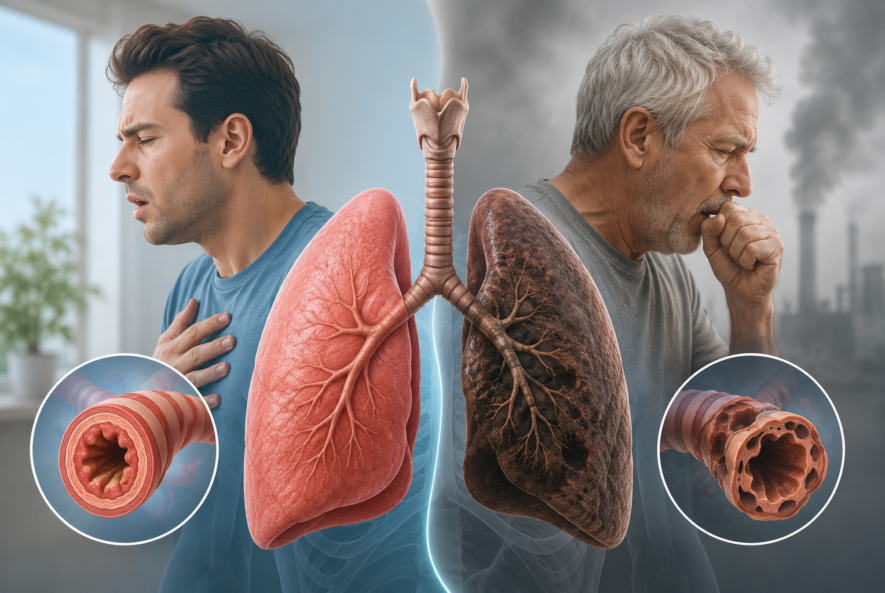
Asthma is a chronic inflammatory disease of the airways that causes them to become narrow, swollen, and produce extra mucus. This makes breathing difficult and can trigger coughing, wheezing, and shortness of breath. Asthma often begins in childhood, although adult-onset asthma is increasingly common, especially in cities like Gurgaon and Delhi NCR where air pollution levels are consistently high.
Asthma symptoms are typically episodic, meaning they come and go, often triggered by specific factors such as allergens, cold air, exercise, smoke, or respiratory infections. Between episodes, many asthma patients have relatively normal lung function, particularly when the condition is well controlled.
What Is COPD?
Chronic Obstructive Pulmonary Disease, or COPD, is a progressive lung disease that includes chronic bronchitis and emphysema. Unlike asthma, COPD causes long-term, largely irreversible damage to the airways and air sacs in the lungs. COPD typically develops over many years, most commonly in people with a significant smoking history, although long-term exposure to air pollution, occupational dust, and biomass fuel smoke are also major contributing factors, particularly relevant for residents of Gurgaon and Delhi NCR.
Unlike the episodic nature of asthma, COPD symptoms are usually persistent and gradually worsen over time. Breathlessness on exertion, a chronic productive cough, and frequent respiratory infections are hallmark features of COPD.
Key Differences Between Asthma and COPD
While both conditions cause airway obstruction and breathlessness, several factors help a pulmonologist distinguish between them:
- Age of onset: Asthma often starts in childhood or early adulthood; COPD typically appears after age 40, usually in long-term smokers or those with significant pollution exposure.
- Reversibility: Asthma airway obstruction is usually reversible with treatment; COPD airway damage is largely permanent and progressive.
- Triggers: Asthma symptoms are often triggered by allergens, exercise, or cold air; COPD symptoms are more consistently present and worsen gradually over years.
- Smoking history: COPD is strongly linked to smoking and long-term pollutant exposure; asthma can occur in non-smokers, including children.
- Disease course: Asthma symptoms can fluctuate and even improve significantly with proper management; COPD tends to progressively decline if not managed early.
Why Accurate Diagnosis Matters
Because asthma and COPD share overlapping symptoms like cough, wheezing, and breathlessness, self-diagnosis or assumptions based on internet searches can be misleading. Some patients even have a combination of both conditions, known as Asthma-COPD Overlap Syndrome (ACOS), which requires a tailored treatment approach.
A proper diagnosis requires a detailed clinical history, physical examination, and pulmonary function tests such as spirometry. These tests measure how much air you can breathe in and out, and how quickly, helping a pulmonologist determine whether the airway obstruction is reversible (suggesting asthma) or fixed (suggesting COPD). Chest X-rays and other investigations may also be used to rule out other causes of breathlessness.
Treatment Approaches
Asthma treatment typically focuses on inhaled corticosteroids and bronchodilators to control airway inflammation and prevent flare-ups, along with identifying and avoiding personal triggers. With consistent treatment, most asthma patients can lead a completely normal, active life.
COPD treatment focuses on slowing disease progression, managing symptoms, and preventing exacerbations. This often includes bronchodilator inhalers, pulmonary rehabilitation, oxygen therapy in advanced cases, and most importantly, smoking cessation. Vaccinations against influenza and pneumonia are also strongly recommended for COPD patients to reduce the risk of serious infections.
Both conditions benefit significantly from reducing exposure to air pollution, which is a particularly important consideration for patients living in Gurgaon, Dwarka, and across Delhi NCR, where seasonal smog can worsen both asthma and COPD symptoms.
When Should You See a Pulmonologist?
If you are experiencing recurring breathlessness, a persistent cough lasting more than three weeks, wheezing, or a tight feeling in your chest, it is important to consult a pulmonologist rather than relying on over-the-counter cough syrups or guesswork. Early and accurate diagnosis of asthma or COPD can prevent complications and significantly improve your quality of life.
Dr. Shivanshu Raj Goyal, a trusted pulmonologist in Gurgaon and Dwarka, specializes in the diagnosis and long-term management of both asthma and COPD using evidence-based treatment protocols tailored to each patient’s specific condition and lifestyle.
Frequently Asked Questions
Can asthma turn into COPD?
Asthma itself does not directly turn into COPD, but long-standing, poorly controlled asthma combined with smoking or pollution exposure can lead to overlapping features of both conditions, known as Asthma-COPD Overlap Syndrome.
Is COPD reversible?
COPD causes largely permanent lung damage, so it is not reversible. However, with the right treatment plan, its progression can be slowed significantly and symptoms can be well managed.
Can a non-smoker get COPD?
Yes. While smoking is the leading cause, long-term exposure to air pollution, occupational dust, chemical fumes, and biomass smoke can also lead to COPD even in non-smokers.