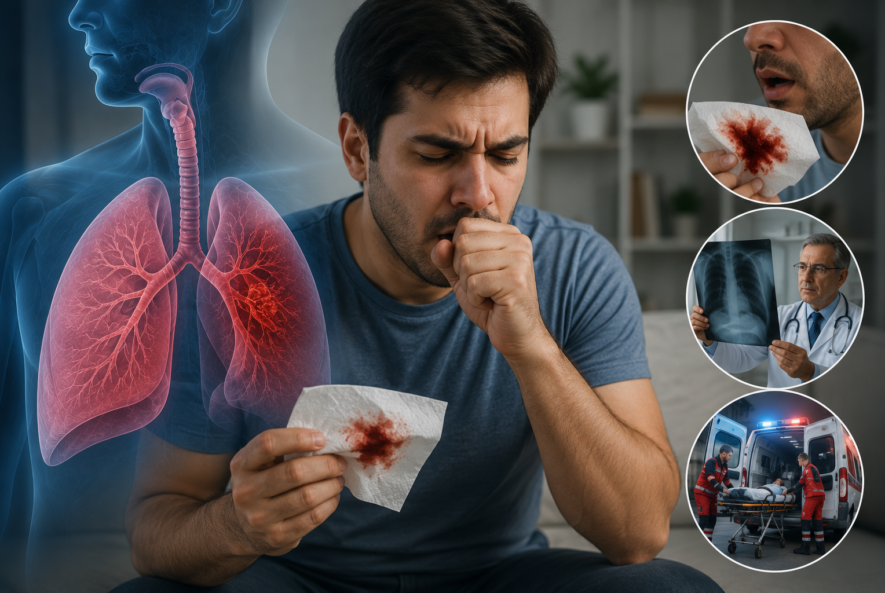
Few symptoms cause as much immediate alarm as coughing up blood, medically known as hemoptysis. It’s a symptom that should never be ignored, but it’s also important to understand that not every instance of blood-streaked mucus indicates a life-threatening condition. The causes of hemoptysis range from relatively minor issues, like a severe cough causing small airway irritation, to serious conditions such as tuberculosis, pneumonia, or lung cancer.
As a pulmonologist in Gurgaon and Dwarka, Dr. Shivanshu Raj Goyal frequently evaluates patients presenting with this symptom, and emphasizes that prompt medical evaluation is essential in every case, both to identify the underlying cause and to rule out serious conditions early.
What Exactly Is Hemoptysis?
Hemoptysis refers to coughing up blood or blood-tinged mucus that originates from the lungs or airways (the lower respiratory tract). It’s important to distinguish this from blood that comes from the nose, mouth, throat, or gastrointestinal tract (which would be vomited rather than coughed up), as the underlying causes and urgency of these situations differ significantly.
Hemoptysis can range from small streaks of blood mixed with mucus to, in severe cases, coughing up larger amounts of pure blood. The volume, frequency, and accompanying symptoms all help determine how urgently medical attention is needed.
Common Causes of Coughing Up Blood
There are several possible causes of hemoptysis, ranging from mild to serious:
- Severe or prolonged coughing: Intense coughing fits, often from bronchitis or a respiratory infection, can sometimes cause minor irritation and small blood streaks.
- Bronchitis: Both acute and chronic bronchitis can inflame the airway lining, occasionally leading to blood-tinged sputum.
- Pneumonia: Lung infections can cause inflammation severe enough to result in blood appearing in coughed-up mucus.
- Tuberculosis (TB): A common and serious cause, particularly in India, TB can damage lung tissue and blood vessels, leading to hemoptysis.
- Bronchiectasis: A condition where the airways become abnormally widened and scarred, often due to past infections, making them prone to bleeding.
- Lung cancer: Persistent or recurrent hemoptysis, especially in smokers or those over 40, requires urgent evaluation to rule out malignancy.
- Pulmonary embolism: A blood clot in the lungs can cause sudden chest pain, breathlessness, and hemoptysis, and is a medical emergency.
- Blood-thinning medications: Patients on anticoagulants may experience hemoptysis more easily due to increased bleeding tendency.
When Is Coughing Up Blood a Medical Emergency?
While any instance of hemoptysis warrants medical evaluation, certain accompanying signs indicate the need for immediate emergency care:
- Coughing up a large amount of blood (more than a few tablespoons) or blood that won’t stop
- Severe chest pain accompanying the cough
- Sudden, severe breathlessness
- Dizziness, fainting, or feeling like you might pass out
- Rapid heartbeat alongside breathlessness
- Bluish discoloration of the lips or fingertips, indicating low oxygen levels
If you or someone you know experiences any of these symptoms alongside coughing up blood, seek emergency medical care immediately rather than waiting for a routine appointment.
What to Do If You Notice Blood in Your Cough
If you notice blood-streaked mucus without any of the emergency warning signs above, it’s still important to schedule a prompt evaluation with a pulmonologist rather than waiting to see if it resolves on its own. In the meantime:
- Try to note the amount, color, and frequency of blood you’re seeing
- Avoid smoking or exposure to irritants
- Keep a record of any other symptoms — fever, weight loss, night sweats, chest pain, or prolonged cough
- Bring any previous chest X-rays or medical records to your appointment
- Inform your doctor if you are on blood-thinning medication
How Is the Cause Diagnosed?
Diagnosing the underlying cause of hemoptysis typically involves a detailed clinical history and physical examination, followed by investigations such as a chest X-ray, CT scan of the chest, sputum tests to check for infections like tuberculosis, and in some cases, a bronchoscopy — a procedure where a thin, flexible tube with a camera is used to directly visualize the airways and, if needed, take tissue samples.
Blood tests to check clotting function and overall health may also be recommended, particularly if no obvious source is found on initial imaging.
Treatment Depends on the Underlying Cause
Treatment for hemoptysis is entirely guided by its root cause. Infections like tuberculosis or pneumonia require appropriate antibiotic or anti-TB therapy. Bronchiectasis may need airway clearance techniques and, in some cases, surgical intervention. Lung cancer requires a comprehensive oncology evaluation and treatment plan. Pulmonary embolism is treated as a medical emergency with blood-thinning medication or clot-removal procedures.
In all cases, identifying the precise cause through proper pulmonary evaluation is the most critical step toward effective treatment and resolution.
Frequently Asked Questions
Is a little blood in my cough always serious?
Not necessarily — minor blood streaking from a severe cough or mild airway irritation can sometimes be benign. However, it should always be evaluated by a doctor to rule out more serious underlying causes, especially if it recurs.
Can stress or anxiety cause coughing up blood?
No, stress and anxiety alone do not cause hemoptysis. If you are coughing up blood, it indicates an underlying physical issue in the respiratory tract that needs proper medical evaluation.
Is coughing up blood always linked to lung cancer?
No. While lung cancer is one possible cause, especially in smokers or older adults, hemoptysis is more commonly caused by infections like bronchitis, pneumonia, or tuberculosis. A proper evaluation is necessary to determine the actual cause.