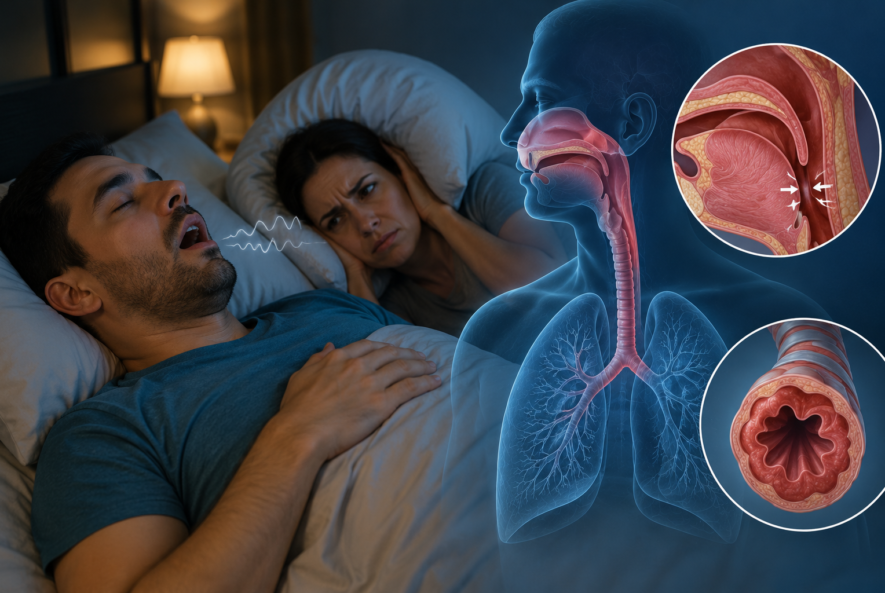
Snoring is often dismissed as a harmless, if slightly annoying, nighttime habit. But when snoring is loud, frequent, and accompanied by pauses in breathing, gasping, or choking sounds during sleep, it could be a sign of a much more serious condition: obstructive sleep apnea (OSA). This is a disorder that affects breathing during sleep and can have significant consequences for both lung health and overall wellbeing if left untreated.
Many patients in Gurgaon and Delhi NCR are unaware that chronic snoring and disrupted sleep patterns are linked to the respiratory system and may need evaluation by a pulmonologist. Dr. Shivanshu Raj Goyal, a pulmonologist in Gurgaon and Dwarka (Delhi), regularly evaluates patients referred for snoring and unexplained daytime fatigue, many of whom are eventually diagnosed with sleep apnea.
What Is Sleep Apnea?
Sleep apnea is a condition characterized by repeated episodes of partial or complete blockage of the upper airway during sleep, leading to pauses in breathing that can last several seconds to over a minute. These pauses cause a temporary drop in blood oxygen levels, prompting the brain to briefly wake the body up to resume normal breathing, often without the person being fully aware it happened.
The most common form, obstructive sleep apnea (OSA), occurs when the muscles in the throat relax excessively during sleep, causing the airway to narrow or collapse. This is different from central sleep apnea, a rarer form where the brain fails to send proper signals to the muscles that control breathing.
How Snoring Is Connected to Airway Health
Snoring occurs when airflow through the mouth and nose is partially obstructed during sleep, causing the surrounding tissues to vibrate. While occasional, mild snoring can be harmless, loud and persistent snoring — especially when it’s positional or worsens when lying on your back — often indicates a narrowed or partially obstructed airway.
Not everyone who snores has sleep apnea, but nearly everyone with obstructive sleep apnea snores. The key indicators that distinguish simple snoring from sleep apnea include witnessed pauses in breathing, gasping or choking sounds during sleep, and excessive daytime sleepiness despite a full night’s sleep.
Common Symptoms of Sleep Apnea
Sleep apnea can present with a combination of nighttime and daytime symptoms:
- Loud, chronic snoring, often disturbing a bed partner
- Witnessed episodes of stopped breathing during sleep
- Waking up gasping, choking, or with a sensation of breathlessness
- Excessive daytime sleepiness, even after a full night’s sleep
- Morning headaches
- Difficulty concentrating, memory issues, or irritability
- Dry mouth or sore throat upon waking
- Frequent need to urinate at night
Who Is at Risk?
Several factors increase the risk of developing obstructive sleep apnea, including excess body weight, a thick neck circumference, a naturally narrow airway, enlarged tonsils, nasal congestion or chronic sinus issues, smoking, alcohol consumption (particularly before bedtime), and a family history of sleep apnea. Men are statistically more likely to develop sleep apnea than women, though the risk in women increases significantly after menopause.
Urban, sedentary lifestyles common in cities like Gurgaon — combined with high stress levels and irregular sleep schedules — can also contribute to weight gain and worsen airway-related sleep issues.
Why Sleep Apnea Should Not Be Ignored
Untreated sleep apnea does far more than disrupt sleep quality. The repeated drops in oxygen levels put significant strain on the cardiovascular system, increasing the risk of high blood pressure, irregular heart rhythms, heart attack, and stroke over time. Sleep apnea has also been linked to insulin resistance and type 2 diabetes, worsening of asthma and COPD symptoms, daytime fatigue leading to accidents, and a general decline in quality of life and cognitive function.
Because sleep apnea directly affects the respiratory system and its consequences overlap significantly with other lung conditions, evaluation by a pulmonologist with experience in sleep-disordered breathing is essential for accurate diagnosis and effective treatment.
How Is Sleep Apnea Diagnosed?
The gold standard for diagnosing sleep apnea is a sleep study, known as polysomnography, which can be conducted in a sleep lab or, in many cases, at home using a portable monitoring device. This test measures breathing patterns, oxygen levels, heart rate, and brain activity during sleep to determine the presence and severity of sleep apnea.
Based on the severity identified through the sleep study, along with a thorough clinical evaluation, a personalized treatment plan can be created.
Treatment Options for Sleep Apnea
Treatment for sleep apnea depends on its severity and underlying cause. For mild cases, lifestyle changes such as weight loss, avoiding alcohol before bedtime, and sleeping on your side rather than your back can significantly reduce symptoms.
For moderate to severe sleep apnea, Continuous Positive Airway Pressure (CPAP) therapy is the most effective treatment. A CPAP machine delivers a steady stream of air through a mask, keeping the airway open throughout the night. Other options include oral appliances that reposition the jaw, and in select cases, surgical intervention to address structural airway obstructions.
Regardless of the treatment chosen, consistent follow-up with a pulmonologist is important to monitor effectiveness and make adjustments as needed.
Frequently Asked Questions
Is snoring always a sign of sleep apnea?
No, not all snoring indicates sleep apnea. However, loud, frequent snoring accompanied by witnessed breathing pauses, gasping, or excessive daytime sleepiness should be evaluated, as these are strong indicators of obstructive sleep apnea.
Can sleep apnea be cured permanently?
In some cases, particularly those related to excess weight, significant weight loss can resolve sleep apnea. For many patients, however, sleep apnea is a chronic condition that is effectively managed long-term with CPAP therapy or other treatments rather than cured outright.
Does sleep apnea affect children too?
Yes, sleep apnea can occur in children, often due to enlarged tonsils or adenoids. Signs in children include loud snoring, restless sleep, bedwetting, and behavioral or attention issues during the day.