A Detailed Medical Perspective by Dr Shivanshu Raj Goyal, Pulmonologist in Delhi NCR
Tobacco consumption has evolved over the decades—from traditional cigarettes to modern electronic vaping devices. While many people believe that vaping is a “safer” alternative to smoking, medical science continues to raise serious concerns about both habits.
According to respiratory experts, including Dr Shivanshu Raj Goyal, both smoking and vaping can significantly damage lung health, but the type, pattern, and long-term effects of harm differ.
This article explores the science behind vaping vs smoking, their effects on the lungs, and answers frequently asked questions that patients commonly ask in clinics.
Understanding Smoking: The Traditional Killer
Cigarette smoking involves burning tobacco, which releases more than 7,000 chemicals, including:
- Nicotine (highly addictive substance)
- Tar
- Carbon monoxide
- Formaldehyde
- Arsenic and other carcinogens
How Smoking Affects the Lungs
When cigarette smoke is inhaled:
- Airways become inflamed
- Air sacs (alveoli) get damaged
- Mucus production increases
- Oxygen exchange decreases
Over time, smoking can lead to:
- Chronic Obstructive Pulmonary Disease (COPD)
- Lung cancer
- Chronic bronchitis
- Emphysema
- Increased risk of tuberculosis and pneumonia
Smoking is also a major contributor to heart disease and stroke.
Understanding Vaping: The Modern Alternative?
Vaping refers to the use of electronic cigarettes (e-cigarettes), which heat a liquid (commonly called e-liquid or vape juice) that contains:
- Nicotine (in most cases)
- Propylene glycol
- Vegetable glycerin
- Artificial flavorings
- Other chemical additives
Instead of smoke, vaping produces an aerosol or “vapor.”
Why People Choose Vaping
Many users believe vaping is:
- Less harmful than smoking
- A smoking cessation tool
- Free from tar and combustion toxins
- More socially acceptable due to less smell
However, these assumptions are only partially true and often misleading.
Vaping vs Smoking: What Science Really Says
1. Nicotine Addiction: Both Are Equal
Both smoking and vaping usually deliver nicotine, which:
- Causes addiction
- Increases heart rate and blood pressure
- Affects brain development (especially in young users)
Vaping may even deliver nicotine more efficiently in some devices, increasing dependency.
2. Chemical Exposure: Smoking is Worse, but Vaping is Not Safe
Smoking exposes users to thousands of toxic chemicals due to combustion.
Vaping avoids combustion but still exposes lungs to:
- Ultrafine particles
- Heavy metals (nickel, lead, tin)
- Volatile organic compounds
- Flavoring chemicals that may damage lung tissue
So while smoking is chemically more toxic, vaping is not chemically “safe.”
3. Lung Damage: Different Patterns, Same Risk Direction
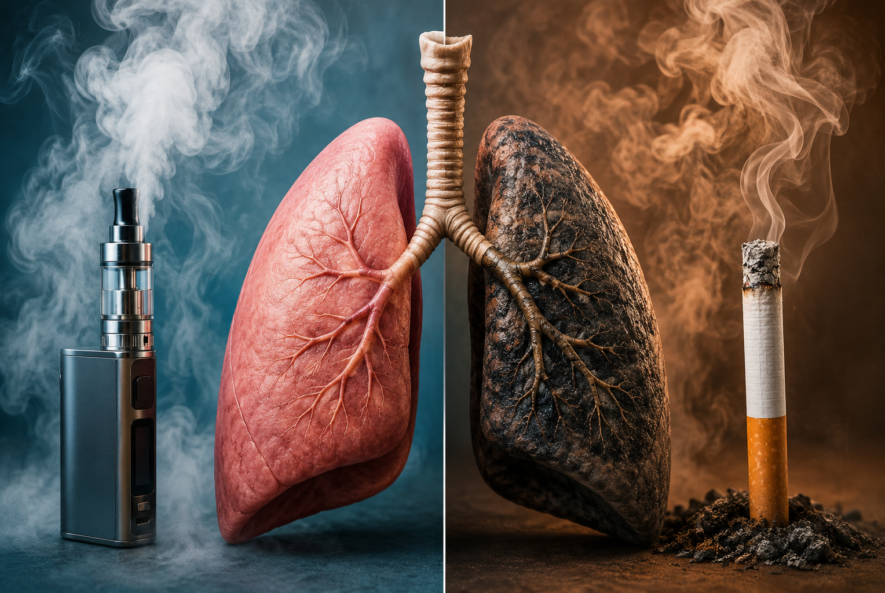
Smoking:
- Causes long-term structural lung damage
- Leads to irreversible COPD
- Strongly linked to lung cancer
Vaping:
- Causes airway inflammation
- Associated with “popcorn lung” (bronchiolitis obliterans in rare cases)
- Linked to EVALI (E-cigarette or Vaping-Associated Lung Injury)
Vaping-related lung injury cases have been reported globally, especially among young users.
4. Impact on Young People
One of the biggest concerns for pulmonologists like Dr Shivanshu Raj Goyal is the rise of vaping among teenagers.
Effects include:
- Early nicotine addiction
- Reduced lung growth
- Increased risk of future smoking habits
- Behavioral dependency
5. Respiratory Symptoms Comparison
| Symptom | Smoking | Vaping |
|---|---|---|
| Cough | Very common | Common |
| Breathlessness | Severe long-term | Moderate but increasing evidence |
| Chest tightness | High risk | Reported in users |
| Lung capacity reduction | Significant | Possible with chronic use |
So, Which Is More Harmful?
Medical consensus:
- Smoking is more harmful overall due to proven long-term damage and carcinogenic exposure.
- Vaping is not safe and carries its own risks, especially for lungs and cardiovascular health.
The key message from pulmonologists is simple:
“Less harmful does not mean safe.”
Neither smoking nor vaping should be considered healthy.
Can Vaping Help Quit Smoking?
Some smokers switch to vaping as a transitional tool. However:
- Many users become dual users (both smoking and vaping)
- Nicotine dependence often continues
- Long-term cessation rates are not consistently high
Doctors recommend medically supervised cessation methods instead, such as:
- Nicotine replacement therapy (patches, gums)
- Behavioral counseling
- Prescription medications when needed
Expert Advice from Pulmonology Practice
In clinical experience shared by Dr Shivanshu Raj Goyal, common patterns observed include:
- Young adults developing vaping-related cough and chest discomfort
- Smokers underestimating COPD risk until late stages
- Increased respiratory infections in regular users
- Anxiety linked with nicotine withdrawal cycles
Early intervention and awareness play a major role in preventing irreversible lung damage.
Prevention and Lung Protection Tips
To maintain healthy lungs:
- Avoid smoking and vaping completely
- Exercise regularly (improves lung capacity)
- Stay hydrated
- Avoid pollution exposure when possible
- Get routine health checkups if symptomatic
- Seek early medical consultation for chronic cough or breathlessness
Frequently Asked Questions (FAQs)
Q1. Is vaping safer than smoking?
Vaping may expose users to fewer toxic chemicals than cigarettes, but it is not safe. It still contains nicotine and harmful aerosols that affect lung health.
Q2. Can vaping cause lung cancer?
Long-term research is still ongoing, but vaping contains carcinogenic substances that may increase cancer risk over time.
Q3. What is EVALI?
EVALI stands for E-cigarette or Vaping-Associated Lung Injury. It is a serious condition causing inflammation and damage to the lungs due to vaping.
Q4. Can smokers switch to vaping to quit smoking?
While some do switch, it is not the most reliable or medically recommended method. Supervised cessation therapy is safer and more effective.
Q5. Which is more addictive: vaping or smoking?
Both are addictive because of nicotine. Some vaping devices deliver higher nicotine doses, making dependency even stronger.
Q6. Can lungs recover after quitting smoking or vaping?
Yes, lung function improves after quitting, but damage like COPD may be permanent if exposure was long-term.
Q7. What are early signs of vaping-related lung damage?
- Persistent cough
- Chest tightness
- Shortness of breath
- Fatigue
- Wheezing
Immediate medical consultation is recommended if symptoms appear.
Conclusion
Both vaping and smoking negatively affect respiratory health, though smoking remains more harmful due to its well-established toxic profile. However, vaping should not be misunderstood as a safe alternative.
As emphasized by Dr Shivanshu Raj Goyal, the best choice for lung health is complete avoidance of both habits.
Healthy lungs are essential for a healthy life—and prevention remains the strongest medicine.