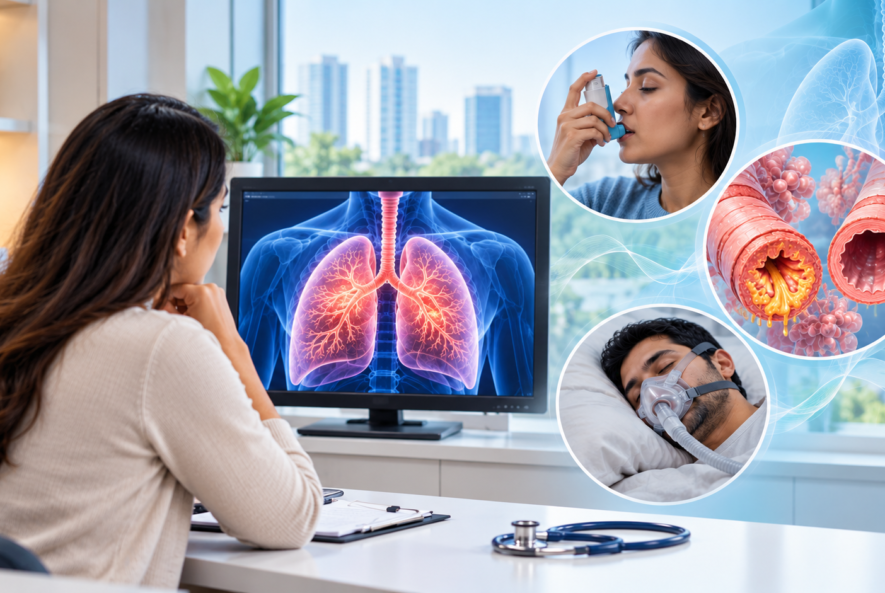
Sector 23 is an established part of Gurgaon, with long-time residents, families who have lived here for decades and a steady mix of professionals. Over the years, many people develop chronic conditions that need regular care, and lung problems are among the most common. Three of the conditions pulmonologists see most often are asthma, COPD and sleep apnea.
Dr. Shivanshu Raj Goyal offers evaluation and long-term management of all three. This guide explains each one in simple terms, so you know the symptoms, the treatment options and when to seek help.
About Dr. Shivanshu Raj Goyal
Dr. Shivanshu Raj Goyal is Director of Pulmonology at Max Super Speciality Hospital, Gurgaon and Dwarka. He holds an MBBS, MD and DNB in respiratory medicine, has over a decade of experience, and trained in interventional pulmonology in Marseille, France. His approach is to explain the diagnosis clearly, treat with the minimum effective medicine and follow patients over time so that treatment adapts to their needs. See his main pulmonologist in Gurgaon page for more.
Asthma care
What is asthma?
Asthma is a chronic condition in which the airways become inflamed, swollen and sensitive. During an attack, they narrow, making it hard to breathe. It can start in childhood or appear for the first time in adulthood.
Symptoms
- Wheezing, especially when breathing out
- Cough, often worse at night or early morning
- Chest tightness and shortness of breath
- Symptoms triggered by exercise, cold air, dust, smoke or strong smells
Common triggers in Gurgaon
Winter smog and fine particles, construction and traffic dust, dust mites and mould at home, pollen during seasonal changes, viral infections, and smoke from cigarettes or incense.
Diagnosis and treatment
Diagnosis is based on symptoms, examination and spirometry, which shows airway narrowing and how well it reverses with medicine. Treatment includes:
- Preventer inhalers that reduce airway inflammation and are taken regularly
- Reliever inhalers that quickly open the airways during symptoms
- Trigger management to reduce exposure to dust, smoke and allergens
- Inhaler technique training so the medicine reaches the lungs
- A written asthma action plan and regular reviews
Many people worry that inhalers are habit-forming. They are not addictive, and because they deliver small doses directly to the lungs, they are usually safer than long-term tablets. Well-controlled asthma means fewer emergencies, better sleep and a full, active life.
COPD care
What is COPD?
Chronic obstructive pulmonary disease is a long-term condition that obstructs airflow and includes chronic bronchitis and emphysema. It is most often linked to smoking, but long-term exposure to air pollution, biomass smoke and workplace dust also plays a role.
Warning signs
- A persistent cough, often called “smoker’s cough”
- Daily phlegm
- Breathlessness during routine activity that gradually worsens (read why stairs can be a warning test)
- Frequent chest infections
- Wheezing and fatigue
Many people dismiss these symptoms as “just age” or “just smoking”, which delays diagnosis. Spirometry confirms COPD.
Treatment and management
- Quitting smoking is the most effective way to slow progression. Counselling and medicines can improve your chances.
- Inhaled medicines relieve symptoms and reduce flare-ups.
- Pulmonary rehabilitation, including breathing exercises and supervised exercise, improves stamina and quality of life.
- Vaccinations such as influenza and pneumococcal vaccines help prevent infections that worsen COPD.
- Oxygen assessment in advanced disease.
- A flare-up plan, so you recognise early signs and know when to seek care.
- Nutrition and weight management, since being underweight or overweight both affect breathing.
COPD cannot be fully reversed, but with the right care many people keep a good quality of life for years. If you have COPD, start preparing early for winter with our pre-winter lung check-up checklist.
Sleep apnea care
What is sleep apnea?
In obstructive sleep apnea (OSA), the throat muscles relax and the airway repeatedly narrows or closes during sleep, causing pauses in breathing and brief awakenings. Many people do not realise they have it. A partner often notices the loud snoring and gasping.
Symptoms
- Loud, persistent snoring
- Pauses in breathing noticed by others
- Gasping or choking at night
- Morning headaches and dry mouth
- Unrefreshing sleep and daytime sleepiness
- Poor concentration, irritability or low mood
- Frequent night-time urination
Why it matters
Untreated sleep apnea is linked to high blood pressure, heart rhythm problems, heart disease, stroke, type 2 diabetes and a higher risk of accidents due to drowsiness. It is particularly relevant for people who drive or work long hours.
Who is at risk?
Excess weight, a thick neck, large tonsils, nasal blockage, alcohol before bed, smoking, older age and family history all increase the risk, though slim people can have it too.
Diagnosis and treatment
After assessing your symptoms and risk factors, Dr. Goyal may recommend a sleep study (polysomnography). Treatment options include:
- Lifestyle changes: weight loss, regular exercise, avoiding alcohol and sedatives near bedtime, sleeping on your side
- CPAP therapy: a device that delivers gentle air pressure to keep the airway open, very effective when used consistently
- Oral appliances in selected mild cases
- Referral to an ENT or other specialist when anatomical problems contribute
Many patients notice better energy, concentration and mood within weeks of starting effective treatment.
When to book an appointment
See a pulmonologist if you have wheezing, night-time cough or chest tightness that keeps returning; a smoker’s cough or breathlessness that is getting worse; loud snoring with tiredness despite a full night’s sleep; frequent chest infections; or a history of asthma or COPD without regular review. Seek emergency care for severe breathlessness, trouble speaking, bluish lips or chest pain.
Everyday lung-care tips for Sector 23 residents
- Check the AQI and avoid outdoor exercise on bad-air days.
- Use a fitted N95 mask during smog or dusty conditions.
- Keep your home clean, dry and well ventilated.
- Do not smoke, and avoid second-hand smoke.
- Take preventer medicines regularly, even when you feel well, unless advised otherwise.
- Keep up with vaccinations as advised.
- Stay physically active and maintain a healthy weight.
How to reach the clinic from Sector 23
Residents of Sector 23 and nearby neighbourhoods such as Palam Vihar and Udyog Vihar [verify and add the landmarks you want to target] can choose from three locations:
| Location | Address | Days and timings |
|---|---|---|
| Max Hospital, Gurgaon | B Block, Sushant Lok 1, Near HUDA City Centre, Gurugram 122001 | Mon, Wed, Fri: 2:00 PM to 5:00 PM |
| Salubrity Clinics, Aartas CliniShare | 10P, 3rd Floor, Golf Course Road, DLF Phase 1, Near Rapid Metro Station, Sector 28 Chakkarpur, Gurugram 122002 | Tue, Thu, Sat: 6:00 PM to 8:00 PM |
| Max Super Speciality Hospital, Dwarka | Plot No. 1, Sector 10, Dwarka, Delhi 110075 | Mon to Sat: 10:00 AM to 5:00 PM |
Please confirm timings by phone before visiting.
Frequently asked questions
Can sleep apnea be treated without surgery? Yes. Many people improve with lifestyle changes and CPAP therapy. Surgery is considered only in selected cases.
Is COPD reversible? Existing lung damage cannot be undone, but treatment and quitting smoking can relieve symptoms and slow progression.
Do I need inhalers for life if I have asthma? Not always. Treatment is adjusted over time, and some people can reduce medicines once their asthma is well controlled.
Can asthma develop in adults? Yes. Adult-onset asthma is common, often triggered by allergies, infections, pollution or workplace exposures.
Is snoring always a sign of sleep apnea? No, but loud snoring with daytime sleepiness or witnessed breathing pauses should be evaluated.
Book an appointment
Chronic lung conditions are manageable with the right care. Call 9667763536 or book an appointment online.
Also read: Chest and breathing specialist in Sectors 49 and 50 | Lung doctor near Dwarka Expressway | Chest specialist near Golf Course Extension Road
Disclaimer: This article is for general awareness and is not a substitute for professional medical advice, diagnosis or treatment.