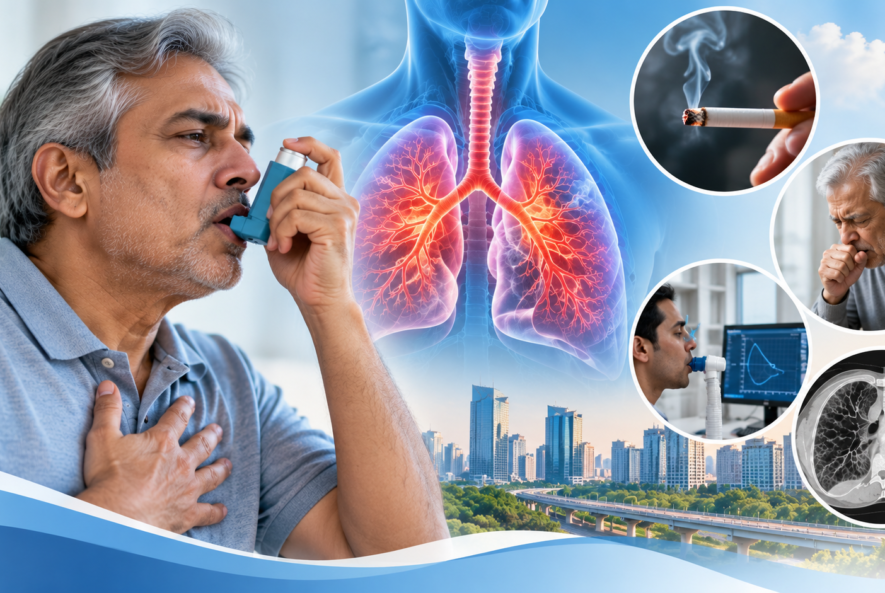
Many people with COPD describe the beginning the same way: “I just thought it was my smoker’s cough,” or “I assumed I was getting older and slower.” By the time they see a doctor, they may have been breathless on stairs for years, cleared phlegm every morning and had several chest infections that were treated as ordinary colds.
COPD is a long-term condition, but it is not one where nothing can be done. Treatment can ease breathlessness, reduce the number of flare-ups, improve exercise tolerance and slow the pace at which function is lost. This guide focuses on the part that matters most to patients and families: how COPD is recognised, how its progression is managed and how to prevent and respond to flare-ups.
What is COPD?
Chronic obstructive pulmonary disease (COPD) is a progressive lung condition in which airflow out of the lungs is persistently reduced. Unlike asthma, where narrowing often comes and goes, the airflow limitation in COPD is largely not fully reversible.
COPD is an umbrella term. Two patterns are commonly described, and many people have features of both:
- Chronic bronchitis: long-standing inflammation of the airways with a daily cough and mucus for at least three months in two consecutive years.
- Emphysema: damage to the tiny air sacs (alveoli) at the ends of the airways, which makes it hard to get air out and reduces the lung’s ability to transfer oxygen.
The label matters less than the practical picture: how severe the airflow limitation is, how breathless you are and how often you have flare-ups. Those three things decide the treatment plan.
COPD symptoms and warning signs
Common COPD symptoms include:
- Breathlessness, first on exertion and later at rest
- A long-standing cough, often worse in the morning
- Sputum (phlegm) production
- Wheeze or chest tightness
- Frequent chest infections
- Tiredness and reduced ability to do usual activities
In advanced disease, weight loss, ankle swelling, morning headaches or confusion can occur and need prompt evaluation.
Seek urgent care if breathlessness suddenly worsens, your lips or fingertips turn blue, you are too breathless to speak, you feel unusually drowsy or confused, or your usual medicines are no longer helping.
Causes and risk factors
The single most important cause worldwide is tobacco smoking, including bidi and hookah use, and long-term exposure to second-hand smoke. But in India and other parts of South Asia, it is just as important to recognise that COPD also occurs in people who have never smoked. Other well-established risk factors include:
- Long-term exposure to smoke from biomass fuels such as wood, dung or coal used for cooking and heating, particularly in poorly ventilated homes
- Occupational exposure to dust, fumes and chemicals, for example in mining, construction, textile and agricultural work
- Outdoor and indoor air pollution
- Previous lung damage, including after tuberculosis or severe childhood respiratory infections
- Asthma that has been poorly controlled for many years
- Alpha-1 antitrypsin deficiency, a rare inherited condition that can cause emphysema at a younger age
If you are interested in how smoking and other exposures affect the lungs more broadly, our page on smoking-related lung disease explains the range of conditions involved.
How is COPD diagnosed?
A diagnosis of COPD should never rest on symptoms and an X-ray alone.
Spirometry is the confirmatory test. In lung function testing, you blow into a device that measures how much air you can breathe out and how quickly. COPD is confirmed when, after a bronchodilator is given, the ratio of the forced expiratory volume in one second to the forced vital capacity (FEV1/FVC) remains below 0.70 in a patient with compatible symptoms and risk exposure. The FEV1 value is then used to grade airflow limitation.
Other tests your doctor may advise:
- Chest X-ray: helpful to exclude other causes and identify complications, but it can look normal in early COPD.
- HRCT chest: assesses the extent and pattern of emphysema, airway disease, bronchiectasis or suspected lung cancer.
- Pulse oximetry and arterial blood gas: check oxygen and carbon dioxide levels.
- Six-minute walk test: measures exercise tolerance and oxygen drop on exertion.
- Blood tests: include a complete blood count and, in selected patients, eosinophil count, which helps guide whether inhaled steroids may be useful.
- Alpha-1 antitrypsin testing: for younger patients, those with basal-predominant emphysema or a family history.
- Echocardiography: when heart strain or right heart failure is suspected.
- Sputum tests: during infections or when tuberculosis or bronchiectasis is a concern.
COPD is often confused with asthma, and some people have features of both. It can also be mistaken for interstitial lung disease, heart failure or post-tuberculosis damage, which need different treatment.
How COPD progression and exacerbations are managed
There are two broad goals in COPD treatment: reduce symptoms now and reduce future risk, meaning flare-ups, hospital admissions and loss of lung function over time. The plan is built around your symptom burden and your exacerbation history, not only your spirometry number.
Smoking cessation and exposure control
Stopping smoking is the one intervention that slows the decline in lung function and it is useful at any stage of COPD. Success rates are much higher with support than with willpower alone. Counselling, nicotine replacement and other prescription medicines are available and are usually more effective in combination. If you are exposed to biomass smoke at home, switching to cleaner cooking fuel or improving ventilation can make a real difference. Workplace exposures should be reduced or eliminated where possible.
Inhaled medicines
Inhalers are the backbone of COPD treatment. The main groups are:
- Short-acting bronchodilators (SABA/SAMA): for quick relief of symptoms.
- Long-acting bronchodilators (LABA and LAMA): taken regularly to keep the airways open. For many patients with significant breathlessness, a combination of LABA and LAMA is preferred over a single agent.
- Inhaled corticosteroids (ICS): added in selected patients, usually those who continue to have exacerbations or who have higher blood eosinophil counts. Unlike asthma, an inhaled steroid is not given to every COPD patient, because it can slightly increase the risk of pneumonia.
- Triple therapy (ICS + LABA + LAMA): sometimes used for patients who continue to have flare-ups despite dual treatment.
Inhaler technique is a common reason for poor results. A device that feels easy in the clinic may be difficult for someone with weak inspiratory effort, poor hand strength or arthritis. If your inhaler does not seem to help, ask for your technique and device choice to be reviewed before concluding that the medicine has failed.
Other medicines
Depending on the situation, doctors may consider:
- Roflumilast, a tablet used in selected patients with chronic bronchitis and frequent exacerbations
- Long-term azithromycin in selected patients with repeated exacerbations, after careful assessment of benefit and side effects
- Mucolytic agents in some people with troublesome sputum
- Treatment of coexisting conditions, such as heart disease, osteoporosis, anxiety, depression and reflux
As with all long-term medicines, selection and dosing must be individual and decided by your treating doctor.
Vaccination
Infections are a major trigger for flare-ups. Annual influenza vaccination and pneumococcal vaccination are generally recommended, and vaccines against COVID-19 and respiratory syncytial virus (RSV) may be advised depending on age and risk. Your doctor will guide you on timing.
Pulmonary rehabilitation
Pulmonary rehabilitation is a supervised programme combining exercise training, breathing techniques, education, nutritional advice and psychological support. It is one of the most effective non-drug treatments in COPD: it improves exercise capacity, breathlessness and quality of life, and it can reduce hospital readmissions after an exacerbation. It helps even people with advanced disease.
You do not need to be “fit enough” to start. The programme is designed for people who are breathless.
Oxygen therapy when appropriate
Oxygen therapy is prescribed when blood oxygen levels are persistently low. In practice, long-term oxygen is considered when oxygen levels at rest are significantly reduced on repeat testing, or when they are borderline and there is evidence of strain on the heart. The benefit is greatest when oxygen is used for the number of hours per day advised. Oxygen is never started on the basis of a single reading or by guesswork, and it should not be used while smoking, because of the fire risk. Some patients need oxygen only during walking or sleep.
In patients with high carbon dioxide levels, non-invasive ventilation (NIV) may be used, in hospital during exacerbations and at home in carefully selected patients.
Procedures and advanced treatment options
A small proportion of people with severe COPD, especially those with emphysema and persistent breathlessness despite the best medical treatment, may be assessed for:
- Endobronchial valves or coils to reduce lung hyperinflation
- Lung volume reduction surgery in carefully selected patients
- Bullectomy for large, compressing air spaces
- Lung transplantation in a few suitable patients with end-stage disease
These options depend on the pattern of emphysema on CT, lung function, fitness and other health conditions, and not everyone qualifies.
Follow-up and monitoring
COPD needs regular review rather than treatment only when things go wrong. Follow-up usually checks symptoms, exacerbations since the last visit, inhaler technique, smoking status, oxygen levels, weight, vaccination status and periodic spirometry. A written action plan can tell you which symptoms to watch for and what steps to take.
Exacerbations: recognising and responding to a flare-up
A COPD exacerbation is a sudden worsening of symptoms beyond your normal day-to-day variation. The usual features are:
- Increased breathlessness
- Increased cough
- Increased sputum volume or a change in its colour or thickness
Most exacerbations are triggered by viral or bacterial respiratory infections, but air pollution, smoke and sometimes heart problems can also be responsible.
Exacerbations matter more than they might seem. They cause loss of lung function that may not fully recover, increase the risk of further flare-ups and are a major cause of hospital admission. Preventing them is a central part of COPD care.
What treatment may involve. Depending on severity, treatment commonly includes increased bronchodilator use, a short course of oral steroids and antibiotics when there is evidence of bacterial infection. Mild flare-ups are sometimes managed at home with an action plan, but you should contact your doctor early rather than wait.
When hospitalisation may be necessary. Admission may be advised for severe breathlessness, new confusion or drowsiness, low oxygen levels, rising carbon dioxide, a poor response to initial treatment, significant coexisting illness, or when home support is not adequate. Some patients need NIV or intensive care.
After an exacerbation. A review within a few weeks is valuable. This is the time to check inhaler technique, adjust long-term treatment, consider rehabilitation and ask what triggered the episode.
When should you see a pulmonologist?
See a specialist if you have:
- Breathlessness, a long-standing cough or recurrent chest infections, especially if you smoke or smoked, or have long-term smoke exposure
- A diagnosis of COPD but continued symptoms despite inhalers
- Two or more exacerbations in a year, or any that needed hospital care
- Oxygen levels that seem low, or breathlessness at rest
- Unexplained weight loss, coughing blood or ankle swelling
- COPD at a young age, or in someone who has never smoked
- Uncertainty about whether your diagnosis is COPD, asthma or something else
COPD care in Gurgaon and Delhi/Dwarka
People looking for a COPD specialist in Gurgaon or a COPD specialist in Delhi are often managing a long-term illness for themselves or a parent. These points can help you choose a service:
- Training and focus: Look for a doctor trained in pulmonary or respiratory medicine with regular experience of COPD care.
- Diagnostic facilities: Reliable spirometry, oxygen assessment, imaging and the ability to arrange a six-minute walk test make a difference.
- Whole-pathway care: Ask about access to pulmonary rehabilitation, inhaler training, vaccination guidance and smoking cessation support.
- Emergency and inpatient backup: Exacerbations can escalate quickly, so a hospital with respiratory and intensive care support is valuable.
- Ease of follow-up: COPD care is long-term, so convenience for regular visits matters.
Dr. Shivanshu Raj Goyal is Director & Unit Head – Pulmonology, Respiratory & Sleep Medicine at Max Healthcare, Gurgaon & Dwarka, Delhi. Patients in Gurugram can read about consultation details for a pulmonologist in Gurgaon, and those in West Delhi can see the pulmonologist in Dwarka page.
Bring your previous reports, X-rays or CT scans, spirometry results, a list of inhalers and other medicines, and a note of any recent hospital admissions. If you use a nebuliser or home oxygen, mention it.
Why personalised treatment matters
Two patients with the same FEV1 may have very different needs. One may be breathless with minimal exertion but rarely have flare-ups, and mainly needs optimised bronchodilators and rehabilitation. Another may have near-normal day-to-day symptoms but be admitted twice a year with exacerbations, and needs a plan focused on prevention. A third may have emphysema suitable for a procedure, or low oxygen that needs home therapy.
Age, other conditions such as heart disease or diabetes, ability to use particular inhaler devices, blood eosinophil count, exposures and personal goals all shape the plan. This is why inhalers, oxygen flow or steroid courses should never be copied from another patient.
Long-term management and prevention
COPD cannot usually be reversed, but its course can be changed. Evidence-based practical steps:
- Stop smoking and avoid second-hand smoke; ask for help to do so
- Reduce exposure to biomass smoke, dust and fumes
- Use maintenance inhalers every day as prescribed, not only when breathless
- Complete pulmonary rehabilitation and stay physically active
- Stay up to date with recommended vaccines
- Wash hands, and avoid close contact with people who have respiratory infections
- Maintain good nutrition; both underweight and obesity can worsen breathlessness
- Check air quality and limit outdoor exertion on high-pollution days
- Keep a written action plan and seek help early when symptoms change
- Attend regular review visits, including when you feel well
Frequently asked questions
What is the most effective treatment for COPD?
No single treatment works for everyone. Stopping smoking, regular long-acting inhalers matched to your symptoms and flare-up history, pulmonary rehabilitation and vaccination together have the strongest evidence for improving symptoms and reducing exacerbations.
Can COPD be completely cured?
No. The airway and lung damage in COPD cannot currently be reversed. However, treatment can significantly relieve symptoms, reduce flare-ups and slow further decline, especially when started early.
What tests are needed to diagnose COPD?
Spirometry after a bronchodilator is required to confirm the diagnosis. Chest X-ray, HRCT, oxygen assessment, a six-minute walk test, blood tests and echocardiography may be added depending on your situation.
When should I see a pulmonologist for COPD?
If you have persistent breathlessness or cough, frequent chest infections, flare-ups despite treatment, low oxygen levels, or if you are unsure whether your diagnosis is correct.
Can COPD get worse without treatment?
Yes. Without treatment and without removing the cause, COPD usually progresses, and untreated flare-ups can accelerate the decline in lung function.
How long does COPD treatment take?
COPD is managed over the long term. Inhalers and other measures are generally continued for life, with adjustments over time. Symptom benefit from inhalers can be noticed within days to weeks, and rehabilitation programmes typically run for several weeks.
Can lifestyle changes help COPD?
Yes. Quitting smoking is the most important step. Regular activity, good nutrition, avoiding pollutants and managing weight also help, alongside prescribed treatment.
What medicines are commonly used for COPD?
Long-acting bronchodilators (LAMA and LABA) are the core, with short-acting relievers as needed. Inhaled steroids, roflumilast, azithromycin and mucolytics are used in selected patients. Your doctor will decide what fits your situation.
When is hospitalisation required for COPD?
When a flare-up causes severe breathlessness, low oxygen, confusion or drowsiness, poor response to initial treatment, or when you cannot be safely managed at home.
Can COPD recur or flare up again?
COPD itself is permanent, but exacerbations can recur. Good inhaler adherence, vaccination, rehabilitation, avoiding triggers and early action on symptoms reduce their frequency.
Is COPD only caused by smoking?
No. Smoking is the leading cause, but long-term biomass smoke exposure, occupational dust, air pollution, previous tuberculosis and genetic factors can also cause COPD in people who have never smoked.
Where can I consult a pulmonologist for COPD in Gurgaon or Delhi?
You can consult Dr. Shivanshu Raj Goyal, Director & Unit Head – Pulmonology, Respiratory & Sleep Medicine at Max Healthcare, Gurgaon & Dwarka, Delhi. You can book a consultation through the website.
Disclaimer: This article is for educational purposes only and does not replace individual medical consultation. Diagnosis and treatment depend on your symptoms, test results and medical history. Please consult a qualified doctor before starting, changing or stopping any medicine. In an emergency, seek immediate medical care.