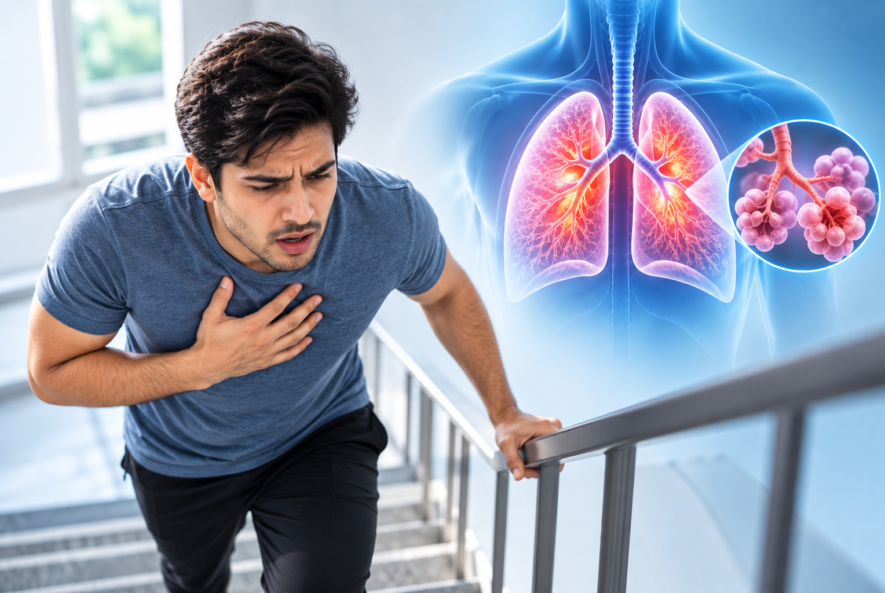
Climbing a flight of stairs is one of the simplest tests of your heart and lungs. Most healthy people feel their breathing quicken and their heart beat faster, then settle within a minute or two. But if you find yourself stopping halfway, gasping at the top, or avoiding stairs altogether, your body may be telling you something.
In my practice as a pulmonologist in Gurgaon, breathlessness on stairs is one of the most common reasons people book a visit. It is also one of the most commonly ignored, because it creeps up slowly and gets blamed on age, weight or “not enough exercise”. Sometimes that is the whole story. Sometimes it is not. This guide explains what is normal, what is not, the main causes, and when to see a doctor.
By Dr. Shivanshu Raj Goyal, Director of Pulmonology at Max Super Speciality Hospital, Gurgaon and Dwarka. MBBS, MD, DNB (Respiratory Diseases).
Why does climbing stairs make you breathless?
Stairs demand a lot from your body. You lift your own weight against gravity, so your muscles need more oxygen and produce more carbon dioxide. To keep up, your breathing rate rises, your heart pumps faster and your lungs move more air.
This chain depends on several systems working together:
- Lungs and airways: bring in oxygen and remove carbon dioxide
- Heart and blood vessels: carry oxygen-rich blood to the muscles
- Blood: needs enough haemoglobin to carry oxygen
- Muscles: need to be conditioned to use oxygen efficiently
- Nervous system and mind: control the breathing rhythm and perception of effort
A problem in any link can make stairs feel harder than they should. That is why breathlessness is a symptom with many possible causes, not a diagnosis in itself.
What is normal, and what is not?
Usually normal:
- Breathing faster after two or three floors, settling within one to two minutes
- Feeling more breathless after a long break from exercise
- Being able to talk in short sentences at the top
Worth checking:
- Needing to stop and rest on one flight that you managed easily before
- Breathlessness that has gradually worsened over weeks or months
- Taking much longer than other people your age to recover
- Wheezing, chest tightness or cough with effort
- Avoiding stairs or walking slowly to prevent breathlessness
A simple self-check is the talk test. If you cannot speak a short sentence at the top of a normal flight of stairs, or you recover far more slowly than before, get evaluated.
Common causes of breathlessness on stairs
1. Lack of fitness (deconditioning)
Long desk hours, travel and limited exercise weaken muscles and reduce stamina. This is very common among working professionals in Gurgaon. The good news is that it improves with regular, gradual exercise. But deconditioning should be diagnosed only after other causes have been considered.
2. Excess weight
Carrying extra weight increases the work of climbing and the work of breathing. Weight around the chest and abdomen also restricts lung movement and raises the risk of sleep apnea.
3. Asthma
Asthma often causes breathlessness with effort, sometimes with wheezing, cough or chest tightness. Many adults live with undiagnosed asthma for years, putting it down to “dust allergy”. Symptoms that are worse at night, in the early morning, in cold air or during pollution spikes are typical. Read more about asthma care and treatment.
4. COPD
Chronic obstructive pulmonary disease causes progressive breathlessness, often with a long-standing cough and phlegm. It is most common in current or former smokers and in people with long-term pollution or dust exposure. Breathlessness usually appears first on stairs or slopes and gradually worsens.
5. Anaemia
Low haemoglobin means your blood carries less oxygen. Tiredness, pale skin, fast heartbeat and breathlessness on exertion are classic signs. It is common, especially among women, and easily tested with a simple blood count.
6. Heart conditions
Heart failure, coronary artery disease, valve problems and rhythm disturbances can all cause exertional breathlessness. Clues include ankle swelling, needing extra pillows to sleep, waking at night breathless, chest pressure with effort, palpitations or dizziness. Chest pain, pressure or fainting with exertion needs urgent medical attention.
7. Interstitial lung disease
This group of conditions causes scarring or inflammation of the lung tissue. A dry, persistent cough and steadily worsening breathlessness are common early signs. Because the chest X-ray may look normal early on, HRCT scanning and lung function tests are often needed.
8. Pulmonary hypertension and blood clots
High blood pressure in the lung arteries, and clots in the lungs (pulmonary embolism), can cause breathlessness out of proportion to exertion. Sudden breathlessness, sharp chest pain, leg swelling after long travel or surgery, and coughing blood need emergency care.
9. Post-infection and post-COVID changes
Some people have lingering breathlessness, fatigue and cough for months after COVID-19, pneumonia or TB. Lung function testing and imaging can show whether the lungs are affected.
10. Sleep apnea
Disturbed sleep leads to tiredness, poor stamina and breathlessness during the day. Loud snoring with pauses in breathing and morning headaches are typical clues. Learn more in our guide on sleep apnea care.
11. Pollution and occupational exposure
Fine particles in the air irritate the airways and can aggravate existing conditions. In Gurgaon, winter smog and construction dust are real contributors. See our pre-winter lung check-up checklist.
12. Anxiety and breathing pattern problems
Anxiety and panic can cause rapid, shallow breathing and a feeling of not getting enough air. This is a real and treatable cause, but it should be diagnosed only after physical causes have been excluded.
13. Other causes
Thyroid disease, pregnancy, obesity hypoventilation, chest wall problems and some medicines can also contribute.
Warning signs that need prompt attention
See a doctor soon if breathlessness on stairs comes with:
- A cough lasting more than three weeks
- Wheezing or chest tightness
- Coughing up blood
- Swelling of the feet or legs
- Waking at night breathless
- Unexplained weight loss, fever or night sweats
- Fast heartbeat, dizziness or fainting
- Bluish lips or fingertips
Go to the emergency department immediately for sudden severe breathlessness, chest pain or pressure, fainting, bluish lips, or inability to speak in full sentences.
How a pulmonologist finds the cause
Because there are so many possible causes, the evaluation is methodical.
1. Detailed history. Dr. Goyal will ask when the breathlessness began, how far you can walk or how many floors you can climb, whether symptoms are constant or episodic, and about cough, wheeze, smoking, allergies, work exposure, sleep, medicines and family history.
2. Examination. This includes listening to the lungs and heart, checking oxygen saturation at rest and, where appropriate, after walking, and looking for swelling, anaemia or other clues.
3. Tests chosen to fit your symptoms. These may include:
- Spirometry (PFT): measures airflow and diagnoses asthma and COPD
- Chest X-ray: looks for infection, fluid, scarring or structural problems
- HRCT chest: gives a detailed view of lung tissue, useful for interstitial lung disease
- Six-minute walk test: assesses exercise capacity and oxygen levels with effort
- Blood tests: for anaemia, infection, thyroid and other causes
- ECG and echocardiogram: to check the heart, often with a cardiology opinion
- Sleep study: if sleep apnea is suspected
- Bronchoscopy: in selected cases, Dr. Goyal performs fibre-optic bronchoscopy to examine the airways and collect samples
Tests are advised only when they will help reach a diagnosis or guide treatment.
Treatment depends on the cause
- Asthma and COPD: inhalers, trigger control, smoking cessation, vaccination and pulmonary rehabilitation
- Anaemia: treating the underlying cause, such as iron or vitamin deficiency
- Heart conditions: referral to a cardiologist and coordinated care
- Interstitial lung disease: specific medicines, monitoring and, when needed, oxygen
- Sleep apnea: lifestyle changes and CPAP therapy
- Deconditioning and weight: a structured exercise and nutrition plan
- Anxiety-related breathlessness: breathing retraining and, where needed, counselling
What you can do while waiting for your appointment
- Pace yourself. Do not push through severe breathlessness. Rest, sit upright and breathe slowly.
- Try pursed-lip breathing. Breathe in through the nose for two counts, then out slowly through pursed lips for four counts. This can ease the sensation of breathlessness.
- Keep a simple record. Note how many floors you can climb before stopping, and what else you notice.
- Avoid smoke, dust and vaping. Check the AQI and avoid outdoor exercise on poor-air days.
- Do not self-medicate with steroids, leftover inhalers or repeated antibiotics.
- Bring your reports, including old X-rays, blood tests and a list of medicines.
Can fitness help?
Regular exercise strengthens muscles and improves oxygen use. If your doctor confirms that you are safe to exercise, start with brisk walking, add a little each week, and build toward 150 minutes of moderate activity a week. If you have a diagnosed lung or heart condition, ask about a supervised programme first.
Why do people delay?
Many people adapt without noticing. They slow down, take the lift, avoid hills and quietly shrink their lives around their breathlessness. By the time they seek help, a condition such as asthma, COPD or heart disease may have been present for years. Early diagnosis often means simpler treatment and better results.
Where to consult
Dr. Shivanshu Raj Goyal consults at:
| Location | Address | Days and timings |
|---|---|---|
| Max Hospital, Gurgaon | B Block, Sushant Lok 1, Near HUDA City Centre, Gurugram 122001 | Mon, Wed, Fri: 2:00 PM to 5:00 PM |
| Salubrity Clinics, Aartas CliniShare | 10P, 3rd Floor, Golf Course Road, DLF Phase 1, Near Rapid Metro Station, Sector 28 Chakkarpur, Gurugram 122002 | Tue, Thu, Sat: 6:00 PM to 8:00 PM |
| Max Super Speciality Hospital, Dwarka | Plot No. 1, Sector 10, Dwarka, Delhi 110075 | Mon to Sat: 10:00 AM to 5:00 PM |
Please confirm timings by phone before visiting.
Find the clinic nearest you: Golf Course Road | Golf Course Extension Road | Dwarka Expressway | New Gurgaon | Sectors 49 and 50 | Sector 23. For his full profile, visit the main pulmonologist in Gurgaon page.
Frequently asked questions
Is it normal to be breathless after climbing stairs? Mild breathlessness after several floors is normal and should settle within a minute or two. Breathlessness that is new, worsening or out of proportion to the effort should be evaluated.
Which doctor should I see for breathlessness on exertion? A pulmonologist can assess your lungs and coordinate heart tests if needed. A cardiologist may also be involved when a heart cause is suspected.
Can anxiety cause breathlessness on stairs? Yes, but it is diagnosed only after physical causes such as asthma, anaemia and heart conditions have been excluded.
When is breathlessness an emergency? Sudden severe breathlessness, chest pain, fainting, bluish lips or difficulty speaking in full sentences needs immediate emergency care.
Can I improve my stamina naturally? Yes. Gradual regular exercise, a healthy weight, quitting smoking and treating any underlying condition all help. Check with your doctor first if you have symptoms.
Book an appointment
If stairs have started to feel harder, do not wait. Call 9667763536 or book an appointment online.
Disclaimer: This article is for general awareness and is not a substitute for professional medical advice, diagnosis or treatment.