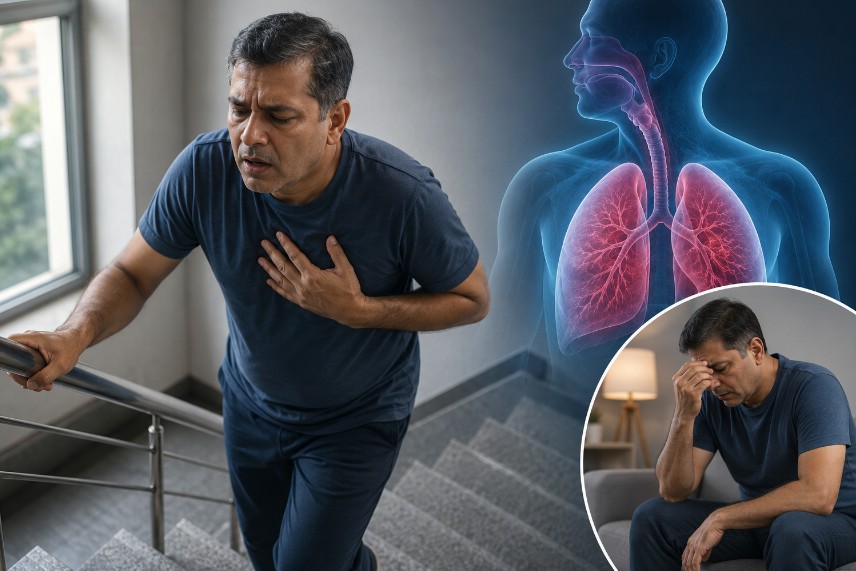
It’s a common scenario: you climb a couple of flights of stairs and find yourself out of breath, your heart pounding, needing a moment to recover. Many people attribute this to simply being ‘out of shape’ and move on without giving it much thought. But breathlessness on exertion — medically known as exertional dyspnea — isn’t always just about fitness levels. In many cases, it can be an early warning sign of an underlying lung or heart condition.
Dr. Shivanshu Raj Goyal, a pulmonologist in Gurgaon and Dwarka (Delhi), often sees patients who initially dismissed their breathlessness as poor fitness, only to discover an underlying respiratory condition during evaluation. Understanding when breathlessness is a fitness issue versus a medical concern can help you seek timely care.
How Much Breathlessness Is ‘Normal’?
Some degree of breathlessness during vigorous physical activity is completely normal, especially if you lead a relatively sedentary lifestyle or haven’t exercised in a while. This type of breathlessness typically resolves within a few minutes of rest and doesn’t worsen progressively over time.
However, breathlessness becomes a cause for concern when it occurs with minimal exertion that previously didn’t cause any difficulty, when it’s progressively getting worse over weeks or months, when it’s accompanied by other symptoms like chest tightness, wheezing, or cough, or when it doesn’t improve despite regular exercise and improved fitness.
Lung-Related Causes of Breathlessness on Exertion
Several respiratory conditions can cause breathlessness specifically during physical activity:
- Asthma: Exercise is a common trigger for asthma symptoms, causing airway narrowing during or shortly after physical activity.
- COPD: As lung function declines, even routine activities like climbing stairs can become noticeably more difficult, often with an accompanying productive cough.
- Interstitial lung disease: This group of conditions causes scarring of lung tissue, leading to progressive breathlessness, particularly during exertion.
- Pulmonary hypertension: Elevated blood pressure in the lung arteries can cause breathlessness, fatigue, and reduced exercise capacity.
- Post-COVID lung changes: Some individuals experience lingering breathlessness on exertion for months after a COVID-19 infection, due to residual lung inflammation or scarring.
- Anemia affecting oxygen delivery: While not a lung condition itself, low hemoglobin levels reduce the blood’s oxygen-carrying capacity, often presenting as breathlessness during exertion.
How to Tell the Difference Between Fitness and a Medical Issue
A few practical signs can help you distinguish between simple deconditioning and a potential underlying health issue. If your breathlessness improves steadily as you build regular exercise into your routine, it’s more likely related to fitness. But if breathlessness persists or worsens despite consistent physical activity, or if it’s accompanied by other symptoms such as a chronic cough, wheezing, chest pain, swelling in the legs, or unexplained fatigue, it warrants a proper medical evaluation.
Another important clue is the pattern of onset. Gradual breathlessness developing over months without a clear explanation, particularly in someone over 40 or with a smoking history, should always be evaluated by a pulmonologist rather than assumed to be a fitness issue.
The Role of Air Pollution in Gurgaon and Delhi NCR
Residents of Gurgaon, Dwarka, and the broader Delhi NCR region face an additional factor that can worsen exertional breathlessness: air pollution. High levels of particulate matter can inflame the airways over time, reducing lung efficiency and making physical exertion feel more difficult than it would in cleaner air conditions.
If you notice that your breathlessness during stair climbing or exercise is noticeably worse during high-pollution months (typically October to February), this pattern is an important clue that your airways may be more sensitive than average and could benefit from a pulmonary evaluation.
How Is the Cause of Breathlessness Diagnosed?
A pulmonologist’s evaluation for exertional breathlessness typically starts with a detailed history covering the duration, pattern, and associated symptoms, followed by a physical examination. Depending on findings, further tests may include pulmonary function tests (spirometry) to assess airway obstruction, a chest X-ray or CT scan to look at lung structure, blood tests to check for anemia or other contributing factors, and in some cases, a cardiopulmonary exercise test to evaluate how your heart and lungs respond to physical exertion.
These tests help determine whether your breathlessness stems from a lung condition, a heart-related issue, deconditioning, or a combination of factors.
Why Timely Evaluation Matters
Many lung conditions that cause exertional breathlessness, including early-stage COPD and interstitial lung disease, respond significantly better to treatment when caught early. Dismissing persistent breathlessness as ‘just being unfit’ can delay diagnosis and allow an underlying condition to progress further, making treatment more challenging.
If you’re experiencing breathlessness while climbing stairs that doesn’t fit the pattern of simple deconditioning, consulting a pulmonologist for a proper evaluation is a worthwhile step toward protecting your long-term lung health.
Frequently Asked Questions
How can I tell if my breathlessness is from poor fitness or a lung problem?
Fitness-related breathlessness typically improves with regular exercise over a few weeks. If breathlessness persists, worsens, or is accompanied by cough, wheezing, or chest discomfort, it’s important to get evaluated by a pulmonologist.
Can air pollution alone cause breathlessness while climbing stairs?
Yes, prolonged exposure to high air pollution levels can inflame the airways and reduce lung efficiency, making physical exertion feel more difficult, even in people without a pre-existing lung condition.
What tests will help diagnose the cause of my breathlessness?
A pulmonologist may recommend pulmonary function tests, a chest X-ray or CT scan, blood tests, and in some cases a cardiopulmonary exercise test, depending on your symptoms and clinical history.