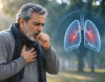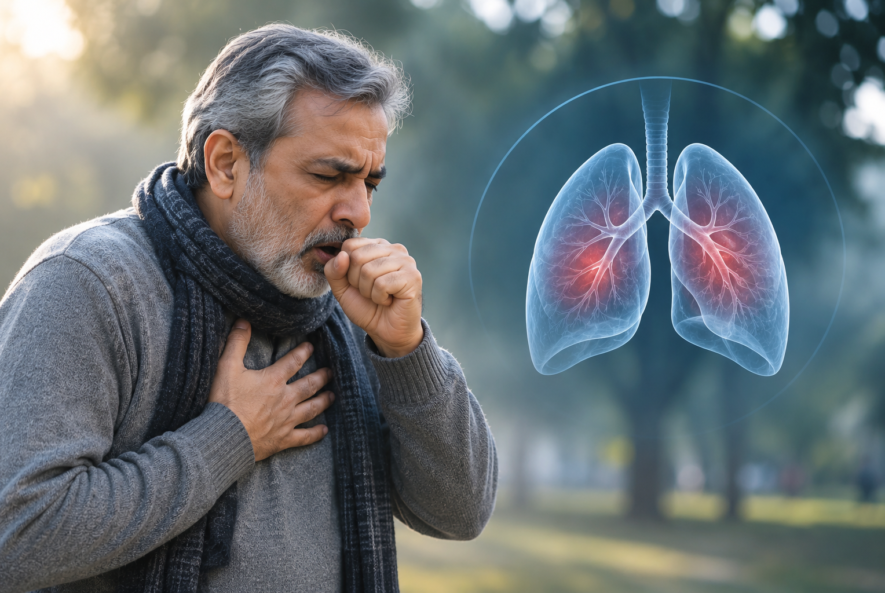
World COPD Day falls on the third Wednesday of November, which is 18 November this year. I like to use the day to ask a simple question: how many people in your own family are living with a breathing problem that has never been properly named?
In my experience, quite a few. A father who has had a “smoker’s cough” for fifteen years. A mother who gets breathless on the stairs and says it’s just age. An uncle who was told he has asthma, took an inhaler for a while, and then stopped. Every one of these could be COPD, and every one of them could be doing better with the right diagnosis.
What COPD actually is
Chronic obstructive pulmonary disease is a long-term condition in which the airways are narrowed and the air sacs in the lungs are damaged. Air has trouble flowing out, so you feel short of breath, cough, and often bring up phlegm. It includes what used to be called chronic bronchitis and emphysema.
Two things are important to understand. COPD is not curable, but it is very treatable. And the damage it causes is slow, which is exactly why it gets missed.
Why it stays hidden for years
COPD creeps. Lung function declines slowly, and the body adapts without you noticing. You stop taking the stairs and tell yourself you’re tired. You walk a little slower, cut down on social plans, and blame your weight or your age.
By the time many people see a doctor, a large portion of lung function is already gone. That’s why early recognition matters so much. Treatment, quitting smoking and avoiding smoke exposure can slow the decline, but lost lung tissue does not grow back.
Signs you shouldn’t ignore
See a doctor if you have any of these, especially if you are over 40:
- A cough that has been there for months, often worse in the morning
- Phlegm most days
- Breathlessness on walking, climbing stairs or doing everyday tasks
- Wheezing or a whistling sound in the chest
- Frequent chest infections or “winter bronchitis” that keeps returning
- Feeling that you can’t take a full, satisfying breath
One cough in winter isn’t COPD. A pattern that repeats year after year is worth testing.
“But I’ve never smoked”
This is the sentence I hear most often, and it’s why so many cases are missed. Smoking is the biggest cause of COPD, but it is not the only one. Roughly a quarter to a third of people with COPD worldwide have never smoked, and in India the picture is no different.
Other causes include:
- Biomass fuel smoke. Cooking on a chulha with wood, cow dung or crop waste fills a home with smoke. Women and children are hit hardest, often for decades.
- Outdoor air pollution. Long-term exposure to fine particles is linked to reduced lung growth in children and faster lung function decline in adults. See our guide on firecracker smoke and stubble burning.
- Occupational dust and fumes. Construction, mining, textile, farming and factory work.
- Past tuberculosis or severe childhood infections. These can leave scarring that later shows up as obstructive disease.
- Genetic factors. Alpha-1 antitrypsin deficiency is rare, but it’s a cause worth testing for in younger patients.
Is it asthma or COPD?
They overlap, and they can even coexist. But there are clues.
Asthma often begins early in life, comes and goes, and is linked with allergies. Symptoms vary a lot from day to day and respond well to treatment. COPD typically appears after 40, with symptoms that are steady and slowly progressive, and it is often tied to smoke or pollution exposure.
Because treatment differs, getting the label right matters. You can read about the two conditions on our pages for asthma and COPD.
Spirometry: the test that settles it
A chest X-ray can look normal in early COPD. Listening to the chest with a stethoscope can miss it too. The test that confirms it is spirometry.
It’s simple and painless. You take a deep breath and blow out as hard and as fast as you can into a small device. It measures how much air you can blow out and how quickly. Sometimes the test is repeated after an inhaler to see how much the airways open up. In COPD, the airflow stays limited even after the inhaler.
The whole thing takes about twenty minutes. No needles, no radiation. If you smoke, have ever smoked, cook with biomass, work around dust, or have a long-standing cough or breathlessness, I would encourage you to get one done, even if you feel “fine”.
What treatment can do
A COPD diagnosis can feel heavy, but the treatment list is longer than most people think.
- Stopping smoking is the single most effective step. It’s never too late to benefit.
- Inhalers relax the airways and ease breathlessness. Technique matters, so we always check how you use them.
- Pulmonary rehabilitation combines supervised exercise, breathing training and education. It makes daily life noticeably easier.
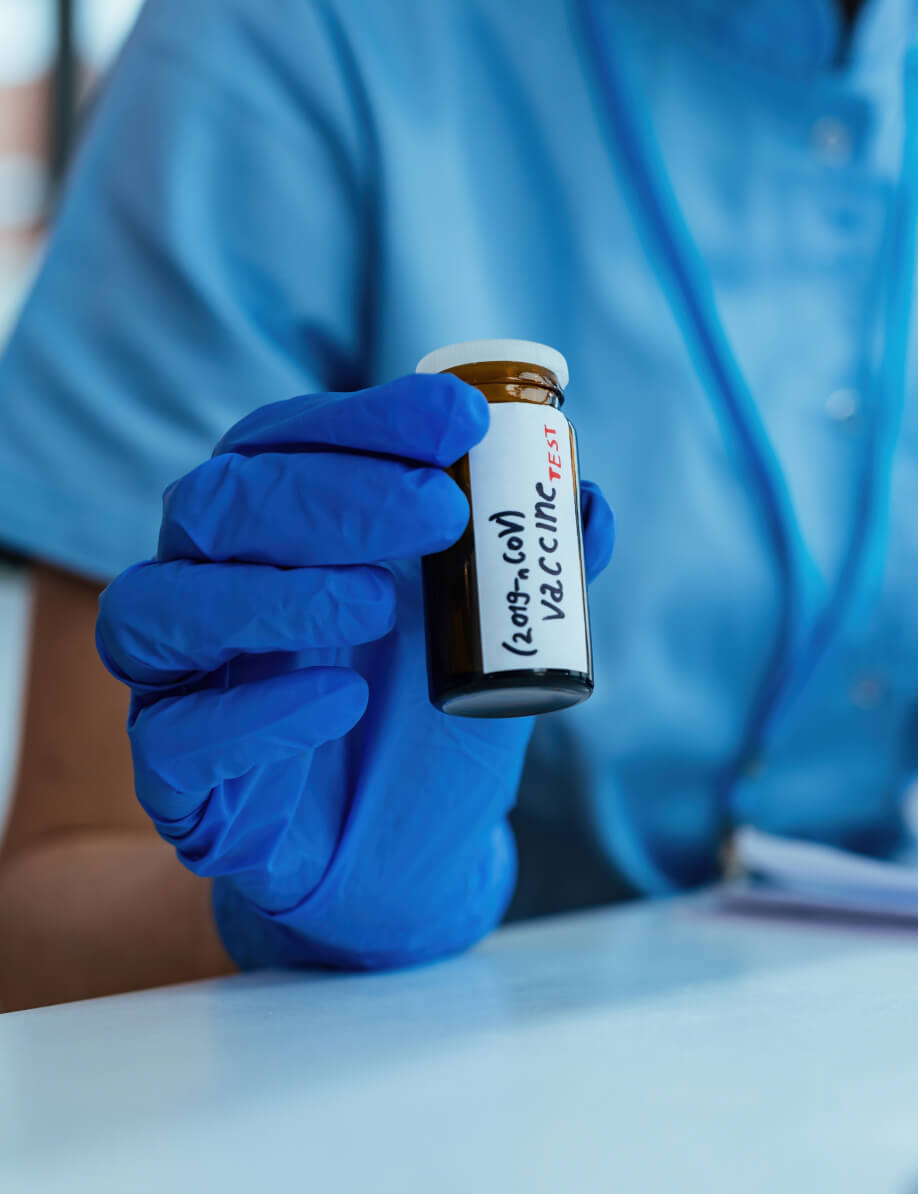
- Vaccines against flu, pneumococcus and COVID-19 reduce the infections that trigger flare-ups.
- Oxygen therapy for those with low oxygen levels.
- Managing flare-ups early with a written action plan, so a bad week doesn’t become a hospital admission.
Pollution makes everything harder, so our winter AQI guide for asthma and COPD patients is a good companion read.
What to do this World COPD Day
If any of this sounded familiar, don’t wait. Book a spirometry test, bring your old reports and the inhalers you use, and talk through your symptoms honestly. And if someone at home has been coughing for years and calling it normal, gently persuade them to get checked. A diagnosis is the first step to feeling better.
Frequently asked questions
Can COPD be cured? No, but it can be controlled. With the right treatment, many people breathe more comfortably, stay active and avoid hospital stays.
Can non-smokers get COPD? Yes. Biomass smoke, air pollution, workplace dust, past TB and genetic factors can all cause it.
At what age should I get tested? There’s no fixed age. Anyone with a long-standing cough, breathlessness or risk exposure, especially above 40, should consider spirometry.
Is COPD the same as chronic bronchitis or emphysema? Both fall under COPD. Chronic bronchitis refers to the long-term cough and phlegm, and emphysema refers to damage to the air sacs. Many people have a mix.
Does exercise help or make breathlessness worse? Regular, guided exercise helps. Pulmonary rehabilitation teaches you how to do it safely.
What triggers a COPD flare-up? Infections, smoke, high pollution days, cold air, and missed medicines are the common triggers.
Worried about a long-standing cough or breathlessness? Book an appointment with Dr Shivanshu Raj Goyal for a spirometry-based evaluation at Max Hospital Gurgaon, Max Hospital Dwarka or Salubrity Clinics.