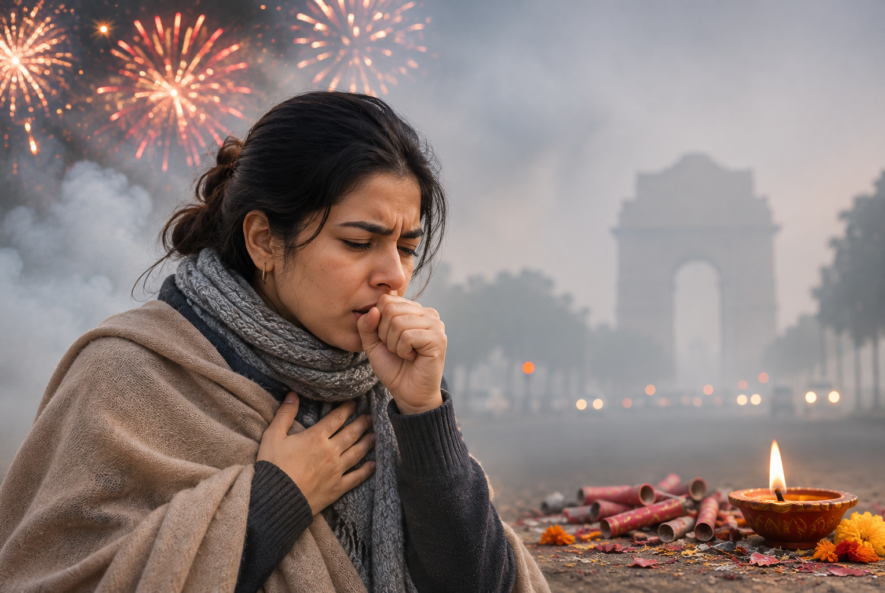
The lights are put away, the sweets are mostly finished, and the sparklers are long gone. But you’re still coughing. Maybe it’s a dry tickle that gets worse when you step outside. Maybe your chest feels tight when you climb the stairs, or you wake up at 3 am wheezing and don’t know why.
This is one of the most common things I hear in the weeks after Diwali, and the first question is almost always the same: Shouldn’t this have gone away by now?
The honest answer is that it often takes longer than people expect, and it isn’t always just the smoke.
Why the smoke stays in your system longer than in the sky
The air may clear up on a windy day, but your airways don’t reset overnight. Here is what’s going on inside.
Airway inflammation takes time to settle. Smoke and fine particles irritate the lining of your breathing tubes. That lining swells and produces extra mucus. Even once you’re out of the smoke, inflammation can take two to three weeks, sometimes longer, to calm down.
The cleaning system gets slowed. The tiny hairs in your airways normally sweep mucus out. Smoke paralyses them for a while. Mucus lingers, you cough to clear it, and the cough itself irritates the airway further.
Airways become hypersensitive. After an irritant exposure, airways can stay twitchy. Cold air, dust, strong smells or exercise, things that never bothered you before, can set off coughing or wheeze. This is sometimes called post-irritant or reactive airway cough.
The pollution didn’t actually end. Diwali is only one piece of the season. Stubble smoke, vehicle emissions and cold weather keep the AQI high for weeks afterwards. If you’re breathing poor air daily, your lungs don’t get a chance to recover. You can read more about this in our piece on firecracker smoke, stubble burning and respiratory health.
A viral infection may be riding along. Irritated airways catch infections easily. Many people have a viral illness on top of the smog, and a cough after a cold can last three to eight weeks.
What a normal recovery looks like
In a healthy person, a smog cough is usually dry or has a little clear phlegm. It tends to improve gradually, and you feel better on cleaner-air days. There is no fever, no chest pain and no struggle to breathe.
A few things help at home:
- Stay hydrated and sip warm fluids
- Use steam only if it truly soothes you; it doesn’t clear pollutants from the lungs
- Avoid smoking and other smoke exposure, including incense and mosquito coils
- Keep windows closed on high-AQI days and use a well-fitted mask outdoors
- Rest and get enough sleep
Don’t fall for lung detox drinks or herbal cleanses. There’s no good evidence that they remove pollution from the lungs. Time, clean air and, if needed, proper medicines do the real work.
Warning signs: don’t wait it out
A smog cough that lingers is common. But some symptoms mean it is more than that, and it’s time to see a pulmonologist.
- Cough lasting more than three weeks, especially if it isn’t improving
- Breathlessness that’s new, worsening, or happening at rest or with light activity
- Wheezing or a whistling sound when you breathe
- Chest pain that worsens with deep breaths or coughing
- Fever with yellow, green or rust-coloured phlegm
- Coughing up blood, even a small amount
- Unexplained weight loss or night sweats
- Blue or grey lips, or confusion, which need emergency care at once
If you have asthma, COPD, a heart condition or old tuberculosis, you should be more cautious. A flare can build quickly, and early treatment prevents a hospital stay.
What might be hiding behind a lingering cough
Sometimes smog simply uncovers a problem that was already there.
- Asthma. Many adults are told they have a post-smog cough when it is actually undiagnosed asthma. A night cough, wheeze and chest tightness are the clues.
- COPD. A smoker’s cough, or breathlessness blamed on age or weight, may be early COPD. We’ll cover this in our World COPD Day article, COPD: the silent disease that’s often missed.
- Bronchitis or pneumonia. Fever, phlegm and tiredness suggest infection. See our pages on bronchitis and pneumonia.
- Acid reflux and post-nasal drip. Both are common causes of chronic cough and are often missed.
- Tuberculosis. A cough with weight loss, fever and night sweats must never be ignored in India.
- Lung cancer. It’s uncommon, but a persistent cough, blood in the phlegm or weight loss needs imaging. This applies to non-smokers too. Read more in lung cancer in non-smokers.
What to expect at the clinic
A good evaluation begins with listening: when the cough started, what it feels like, what makes it worse, your work and home environment. After that, depending on your symptoms, we may suggest a chest X-ray, a breathing test called spirometry, blood tests, or a CT scan. If something needs a closer look, procedures such as flexible bronchoscopy let us see inside the airways directly.
Most people with a smog-related cough don’t need anything dramatic. Often, a short course of the right inhaler or medicine, and a clear plan, settles things quickly.
Frequently asked questions
How long does a cough after Diwali smog usually last? Most smog-related coughs improve over two to three weeks once exposure drops. If it lasts beyond three weeks, get it checked.
Is it normal to feel breathless after Diwali? Mild breathlessness on exertion can occur when airways are inflamed, but breathlessness at rest or one that keeps worsening isn’t normal and should be examined.
Do I need antibiotics for my cough? Not usually. Smog cough and most viral coughs don’t respond to antibiotics. They’re needed only when there is a bacterial infection, which a doctor can identify.
Can smog cause asthma in someone who never had it? Pollution can trigger asthma symptoms and may contribute to new-onset asthma, particularly in people already prone to allergies.
Is steam inhalation good for smog cough? It may feel soothing for a blocked nose or throat, but it doesn’t remove pollutants from the lungs, and very hot steam can cause burns, especially in children.
Which doctor should I see for a long-standing cough? A pulmonologist is the right specialist if your cough lasts more than three weeks or comes with breathlessness, wheeze or chest pain.
Still coughing? Book an appointment with Dr Shivanshu Raj Goyal at Max Hospital Gurgaon, Max Hospital Dwarka or Salubrity Clinics, Golf Course Road. You can also read our guide to finding a good pulmonologist in Gurgaon.