Breathlessness has a strange way of becoming normal. It rarely shows up overnight — it creeps in gradually, over months or years, and most people quietly adjust around it rather than question it. You start taking the lift instead of the stairs without really deciding to. You slow down on walks with friends and blame it on being “out of shape.” You tell yourself it’s just age, or the weather, or that extra weight you’ve been meaning to lose. For a lot of people in Gurgaon, especially those over 40 with any history of smoking or long-term exposure to pollution, that gradually worsening breathlessness is actually Chronic Obstructive Pulmonary Disease — COPD — and it’s been developing quietly for far longer than the symptoms suggest.
What COPD Actually Is
COPD is an umbrella term for a group of progressive lung conditions — primarily chronic bronchitis and emphysema — that cause the airways to narrow and the lung tissue to lose elasticity over time. Unlike asthma, where airway narrowing is often largely reversible with treatment, COPD involves a degree of permanent damage. That doesn’t mean it can’t be managed well — it absolutely can — but it does mean that catching it early, before significant lung function is lost, makes a real difference to long-term quality of life.
The tricky part about COPD is that by the time most people notice breathlessness affecting their daily activities, lung function has often already declined by 50% or more. The disease simply doesn’t announce itself early on.
Who Should Be Paying Closer Attention
Certain groups are at meaningfully higher risk and should have a lower threshold for getting evaluated, even with mild symptoms:
- Current or former smokers, regardless of how long ago they quit
- Anyone with significant long-term exposure to biomass fuel smoke (common in older generations who cooked over wood or coal fires)
- People with years of occupational exposure to dust, chemical fumes, or industrial pollutants
- Long-term residents of high-pollution cities, particularly those with outdoor jobs or long commutes
- Anyone with a family history of COPD or early-onset emphysema
- Adults over 40 with any persistent respiratory symptoms
If you fall into more than one of these categories, it’s worth getting a baseline lung function test even without obvious symptoms yet.
Signs of Breathing Difficulty That Warrant Evaluation
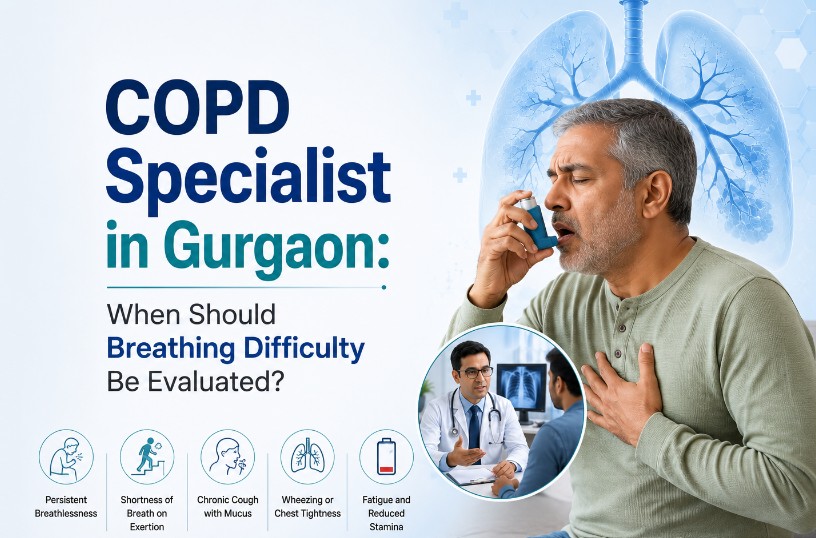
Breathlessness That’s Gradually Gotten Worse Over Months or Years
This is the hallmark symptom of COPD, and also the easiest one to explain away. If you find that activities which used to feel effortless — a flight of stairs, a brisk walk, carrying shopping bags — now leave you noticeably more breathless than they did a year or two ago, that gradual decline deserves proper evaluation rather than being chalked up to ageing or lack of fitness.
A Persistent Cough With Mucus, Especially in the Morning
Chronic bronchitis, one of the two main components of COPD, is often marked by a cough that produces mucus most days, particularly first thing in the morning. Many long-term smokers refer to this dismissively as a “smoker’s cough” without recognising it as an actual symptom of underlying lung disease that’s worth investigating.
Wheezing or a Tight Feeling in the Chest
A whistling sound while breathing, or a sensation of tightness across the chest — particularly during exertion or cold weather — can indicate narrowed airways consistent with COPD, especially when it occurs alongside the risk factors mentioned above.
Frequent Chest Infections
If you seem to catch chest infections, bronchitis, or even pneumonia more often than people around you, and each episode takes longer than expected to fully clear, this pattern can be an early indicator of compromised lung defences related to COPD.
Reduced Stamina That’s Changed Your Daily Habits
This is often the symptom that finally prompts people to see a doctor — not the breathlessness itself, but the lifestyle changes it has quietly forced. Skipping social plans that involve walking. Choosing a ground-floor flat during a house search without quite admitting why. Needing to pause partway through simple tasks. These adaptations are worth naming directly, because they’re a meaningful sign that breathing difficulty has already started affecting quality of life.
Swelling in the Ankles or Legs
In more advanced COPD, the strain placed on the heart from long-term lung disease can lead to fluid retention, showing up as swelling in the lower legs and ankles. This is a sign that the condition has progressed and needs prompt specialist attention.
Unintentional Weight Loss
Losing weight without trying, particularly alongside breathing difficulty, can occur in more advanced COPD as the extra effort of breathing burns significantly more calories than normal. This combination should always be evaluated without delay.
Why Gurgaon’s Environment Makes This Especially Relevant
Gurgaon’s air quality index regularly reaches “poor” to “severe” levels during winter months, and for people with any degree of existing airway vulnerability — whether from smoking history, occupational exposure, or simply years of living in a high-pollution environment — this seasonal pollution can accelerate symptom progression and trigger more frequent flare-ups. Patients already diagnosed with COPD in Gurgaon often notice a clear, predictable worsening of symptoms each winter, which is exactly why ongoing specialist management, rather than a one-time diagnosis, matters so much here.
How COPD Is Diagnosed
The good news is that diagnosing COPD is relatively straightforward once you’re in front of the right specialist. The process typically involves:
Detailed history — smoking history (including pack-years), occupational exposures, family history, and a clear timeline of symptom progression.
Spirometry — the gold-standard lung function test for COPD, measuring how much air you can exhale and how quickly. This single test can confirm or rule out COPD with a good degree of confidence and also helps determine severity.
Chest X-ray or CT scan — used to assess the extent of lung changes and rule out other conditions, including lung cancer, which shares some risk factors with COPD.
Pulse oximetry or arterial blood gas testing — to check oxygen levels, particularly in more advanced cases.
Bronchoscopy — occasionally used in more complex cases, particularly where there’s a need to rule out other coexisting conditions.
Why Early Evaluation Changes the Trajectory
COPD can’t be reversed, but its progression can absolutely be slowed — and in many cases, slowed significantly — with the right combination of medication, pulmonary rehabilitation, smoking cessation support, and vaccination against respiratory infections. Patients diagnosed early, while lung function is still relatively preserved, generally have far better long-term outcomes and maintain a meaningfully better quality of life than those diagnosed only after severe symptoms force the issue. This is really the core argument for not waiting: every year spent attributing breathlessness to “getting older” is a year where treatment could have been slowing the disease down instead.
Getting Evaluated by a COPD Specialist in Gurgaon
Dr. Shivanshu Raj Goyal, Director of Pulmonology, Respiratory and Sleep Medicine at Max Super Speciality Hospital, manages COPD as one of his primary areas of clinical focus, alongside asthma, ILD, tuberculosis, and sleep-related breathing disorders. With more than a decade of clinical experience — including prior roles at Sir Ganga Ram Hospital and as Head of Pulmonary Medicine at Artemis Hospitals — and dedicated training in interventional pulmonology from Marseille, France, his practice is equipped to handle both routine COPD management and more complex cases requiring procedural intervention.
Max Hospital, Gurgaon — B Block, Sushant Lok 1, Near Huda City Centre, Gurugram, Haryana 122001. Monday, Wednesday, Friday, 2:00 PM – 5:00 PM.
Max Super Speciality Hospital, Dwarka — Plot No. 1, Sector 10, Dwarka, Delhi 110075. Monday to Saturday, 10:00 AM – 5:00 PM.
Aartas CliniShare, Gurugram — 10P, 3rd Floor, Golf Course Road, DLF Phase 1, Near Rapid Metro Station, Sector 28 Chakkarpur, Gurugram 122002. Phone: 9667763536.
The Bottom Line
Breathlessness that’s gradually gotten worse, a persistent morning cough, or frequent chest infections are not just signs of “getting older” — especially if you have any history of smoking or long-term exposure to pollution. COPD is a progressive condition, but one where early evaluation and treatment genuinely change the outcome. If your body has been quietly asking you to slow down for a while now, it’s worth finding out why, rather than continuing to adjust your life around it.