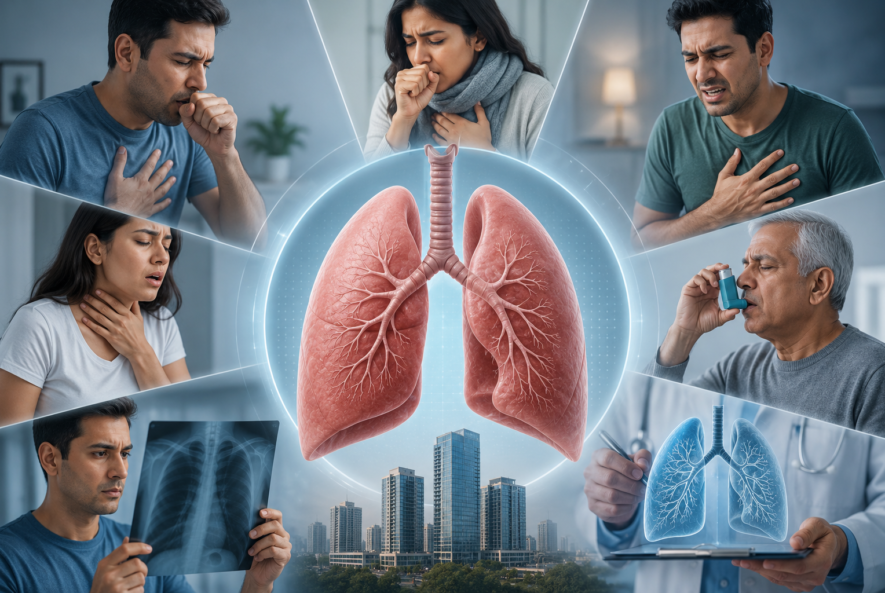
Many people delay visiting a lung specialist because they assume their symptoms are due to a common cold, seasonal allergy, or simply being ‘unfit.’ But in a region like Gurgaon and Delhi NCR, where air quality is consistently poor for several months each year, respiratory symptoms should never be brushed aside. Lung diseases tend to develop silently, and what feels like a minor cough or occasional breathlessness can sometimes be an early sign of a more serious underlying condition.
As a leading pulmonologist in Gurgaon and Dwarka, Dr. Shivanshu Raj Goyal regularly sees patients who waited months before seeking proper evaluation, often after trying multiple home remedies and over-the-counter medications. Knowing the warning signs that warrant a visit to a lung specialist can make the difference between early, effective treatment and a prolonged, complicated recovery.
1. A Cough That Lasts More Than Three Weeks
An occasional cough following a cold or flu is normal and usually resolves within one to two weeks. However, a cough that persists beyond three weeks — known medically as a chronic cough — needs proper evaluation. Chronic cough can be linked to asthma, post-nasal drip, acid reflux, chronic bronchitis, or in some cases, more serious conditions such as tuberculosis or lung disease.
2. Breathlessness During Routine Activities
Feeling breathless after climbing a couple of flights of stairs, walking briskly, or doing light household chores is a red flag, especially if this is a new development. While breathlessness can sometimes be related to general fitness levels, unexplained or progressively worsening breathlessness often points to an underlying lung or heart condition that requires evaluation by a specialist.
3. Wheezing or a Whistling Sound While Breathing
Wheezing, a high-pitched whistling sound during breathing, typically indicates narrowed airways. This is commonly associated with asthma, COPD, or bronchitis. If wheezing occurs frequently, especially at night or after exposure to dust, smoke, or cold air, it’s a strong indication that you should consult a pulmonologist for proper diagnosis and treatment.
4. Recurrent Chest Infections
If you find yourself getting chest infections, bronchitis, or pneumonia repeatedly — more than two or three times a year — this pattern suggests your respiratory system may be compromised in some way. Recurrent infections can be a sign of a weakened airway, underlying lung disease, or a structural problem that needs to be investigated by a lung specialist.
5. Chest Tightness or Pain While Breathing
A sensation of tightness, pressure, or pain in the chest, particularly when it worsens with breathing or physical activity, should never be ignored. While chest pain can have several causes, including cardiac issues, a pulmonologist’s evaluation is essential to rule out lung-related causes such as pleurisy, asthma, or a pulmonary embolism.
6. Noticeable Decline After Exposure to Gurgaon’s Air Pollution
Many residents of Gurgaon, Dwarka, and other parts of Delhi NCR notice a clear pattern: their breathing worsens significantly during the high-pollution months between October and February. If you find your symptoms flaring up consistently during smog season — increased coughing, breathlessness, or eye and throat irritation alongside respiratory symptoms — this is a sign that your airways are sensitive and may benefit from a proper pulmonary evaluation and a preventive management plan.
7. Unexplained Fatigue Along With Breathing Symptoms
When the lungs are not functioning efficiently, the body doesn’t receive adequate oxygen, which can lead to persistent fatigue, even after adequate rest. If you are experiencing unusual tiredness alongside breathing difficulty, cough, or chest discomfort, it’s worth getting your lung function assessed.
8. Snoring Loudly or Waking Up Gasping for Air
Loud snoring accompanied by pauses in breathing during sleep, or waking up gasping or choking, can indicate sleep apnea, a condition that falls under the evaluation of a pulmonologist or sleep medicine specialist. Left untreated, sleep apnea can affect heart health, daytime energy levels, and overall quality of life.
Why Early Consultation Matters
Many respiratory conditions, including asthma, COPD, and interstitial lung disease, progress more easily when caught early. Delaying a visit to a lung specialist often means the condition has more time to worsen, making treatment more complex and recovery slower.
Dr. Shivanshu Raj Goyal, a trusted pulmonologist in Gurgaon and Dwarka, provides comprehensive respiratory evaluations using clinical examination and advanced pulmonary function testing to accurately diagnose the underlying cause of your symptoms and create a personalized treatment plan.
Frequently Asked Questions
Should I see a general physician or a pulmonologist for breathing problems?
For mild, short-term symptoms like a common cold, a general physician is sufficient. However, for persistent, recurring, or unexplained respiratory symptoms, a pulmonologist provides specialized evaluation and treatment that a general physician may not be equipped to offer.
How does Gurgaon’s air pollution affect lung health?
High particulate matter (PM2.5 and PM10) levels in Gurgaon’s air can irritate and inflame the airways, worsening asthma, COPD, and other respiratory conditions, and increasing the risk of new respiratory issues developing over time.
What tests will a pulmonologist do during the first visit?
A typical evaluation includes a detailed history, physical examination, and may include pulmonary function tests (spirometry), chest X-ray, or other investigations depending on your specific symptoms.